The Super King Room
The principal bedroom, tucked up under the eaves where the old beams meet the thatch.
The principal bedroom, tucked up under the eaves where the old beams meet the thatch.
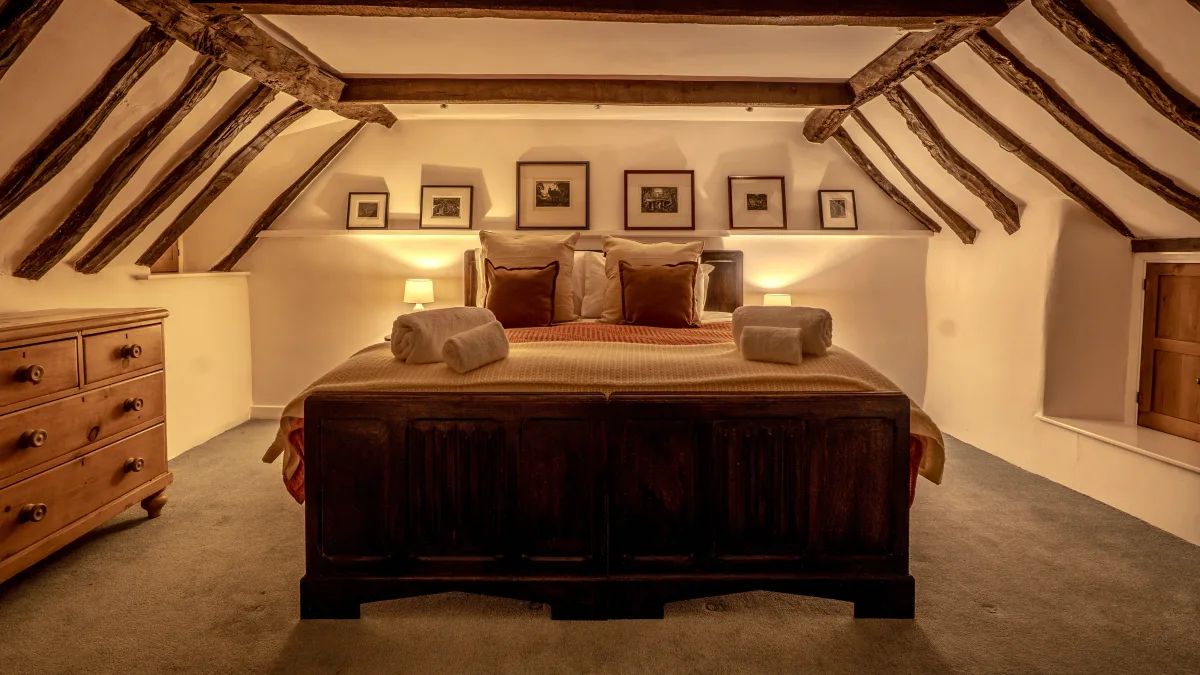
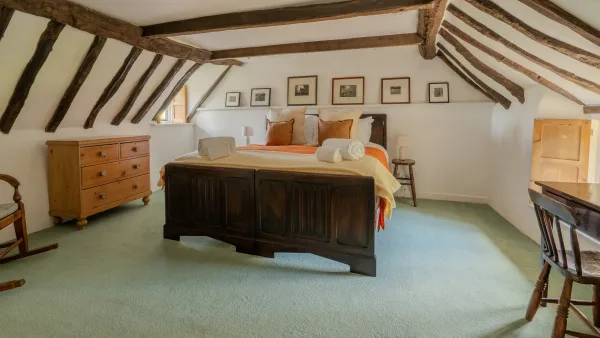
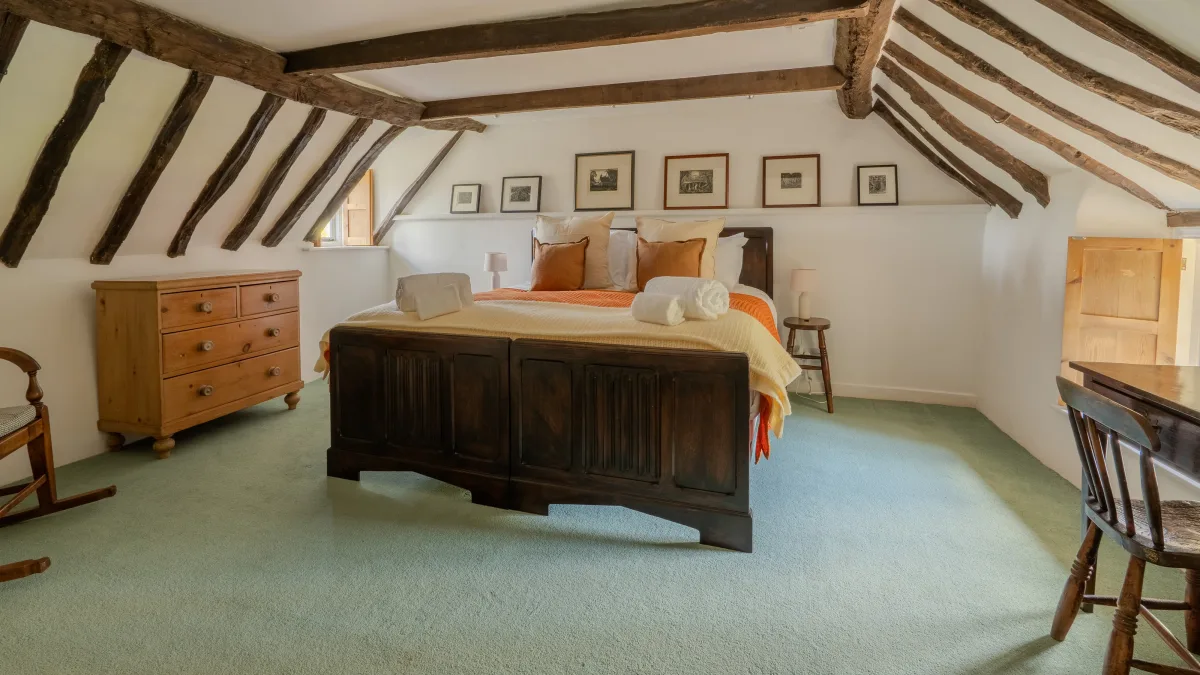
Climb the last flight of stairs and the cottage gathers itself around you. The ceiling slopes with the roofline, its oak beams blackened by age and fanning down from the ridge to walls of soft white lime plaster. Nothing is quite level, nothing is quite square. The floorboards give gently underfoot and the room has the particular stillness of a house that has been breathing for over four hundred years.
At roughly eleven square metres, it is not the largest bedroom in the cottage, but it is the one guests remember. The proportions feel intimate rather than small, the low eaves drawing the space in close around the bed.
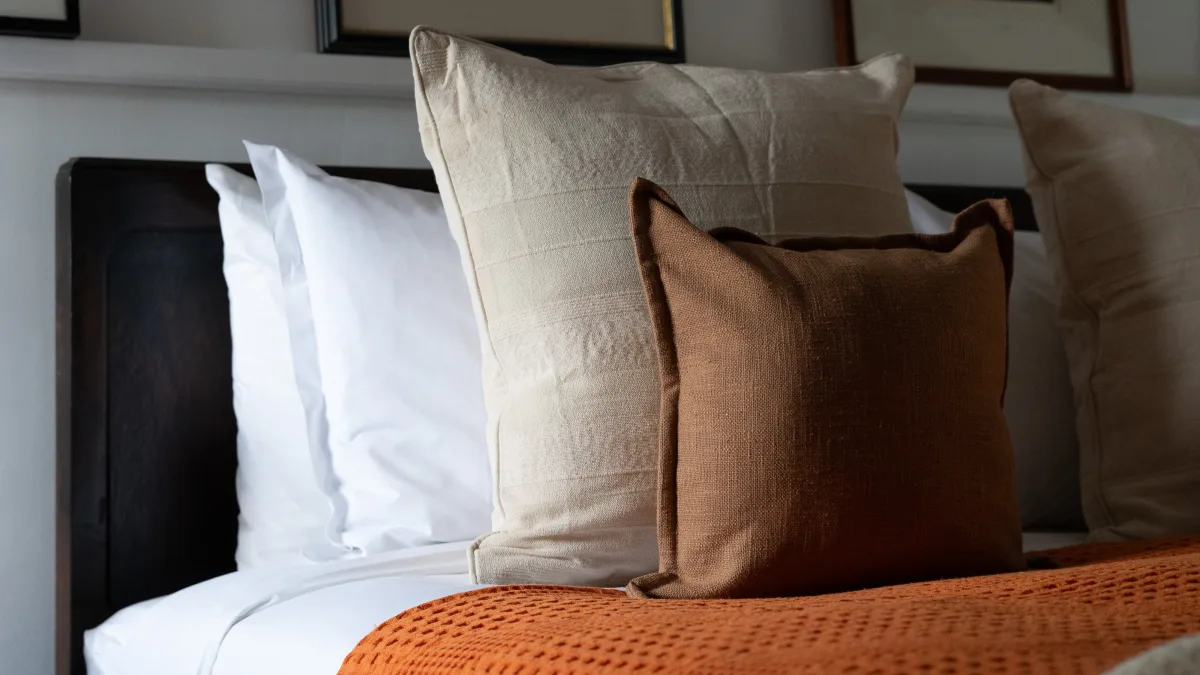
The super king bed is the centrepiece: a substantial dark-wood bedstead with linenfold carving worked into its headboard and footboard, the kind of piece that belongs in a room like this. It sits square between the eaves, the sloping beams framing it on both sides.
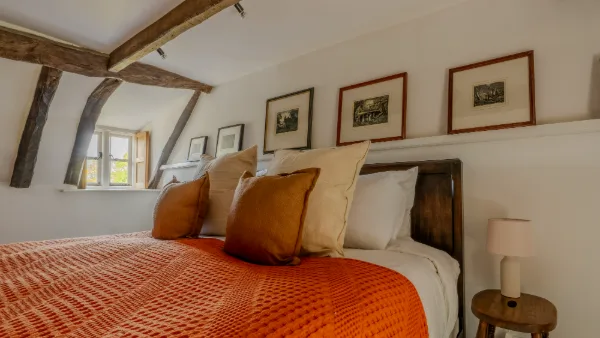
The bedding is layered for Cotswold nights. Crisp white cotton sheets, a scatter of oatmeal and rust linen cushions against the headboard, and a burnt-orange waffle throw folded at the foot over a cream one beneath. The mattress is a good one: firm, quiet, and deep enough to sink into after a day walking the hills.
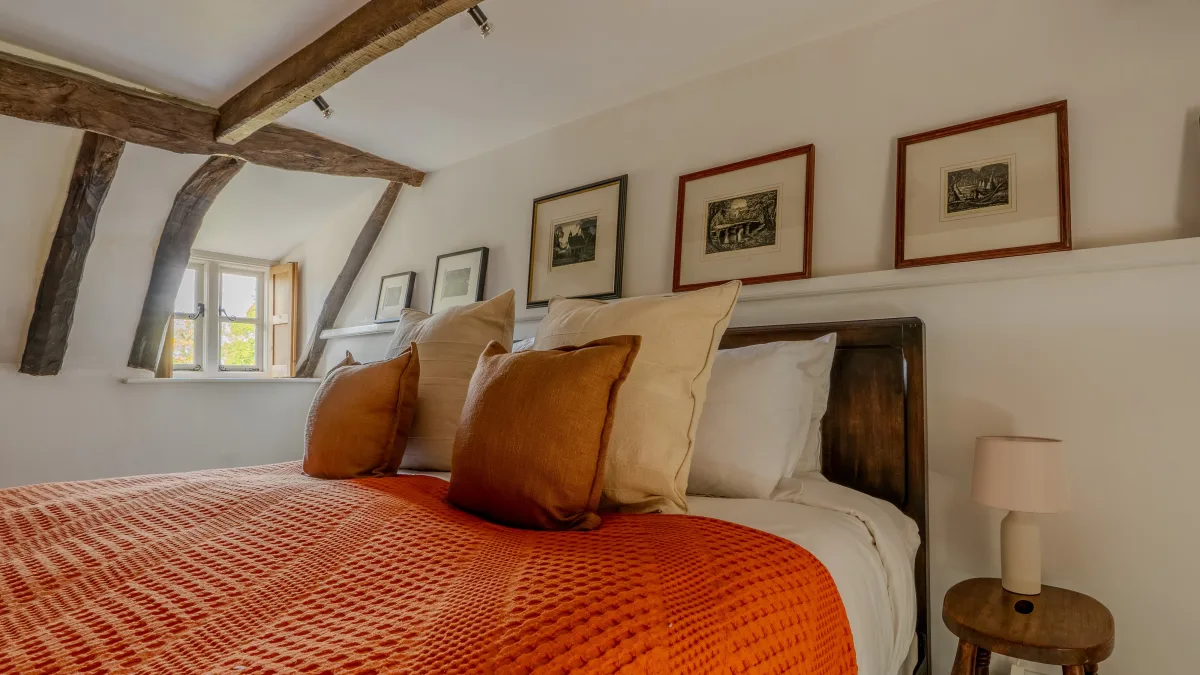
A deep casement window sits in the thick stone wall, fitted with a solid pine shutter that folds back flat against the reveal. In the morning the room transforms: the lime-plaster walls catch the light, the beams read warm rather than dark, and the green of the walled garden pours in through the glass.
There is birdsong and not much else. The hamlet of Ledwell sits at the end of a lane, and this corner of the cottage faces nothing but trees and the old stone wall. It is the kind of quiet that lets you sleep until you are ready.
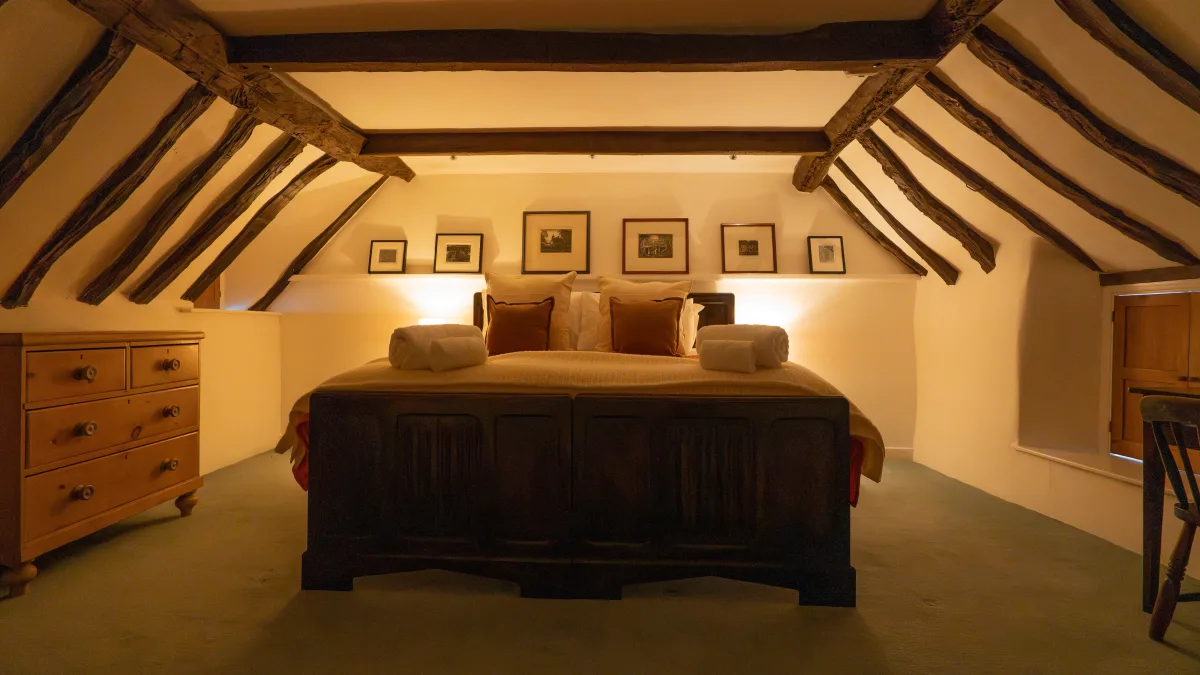
This is a room to settle into, not just to sleep in. A pine dresser with its original turned knobs stands against one wall, with deep drawers for unpacking properly rather than living out of a suitcase. A wooden rocking chair sits in the far corner, angled toward the window.
Under the lowest point of the eaves, a small writing table is set up with a lamp: somewhere to take a cup of tea in the early morning, or to sit with a book while the rest of the house is still quiet below. It is the kind of corner that earns its keep.
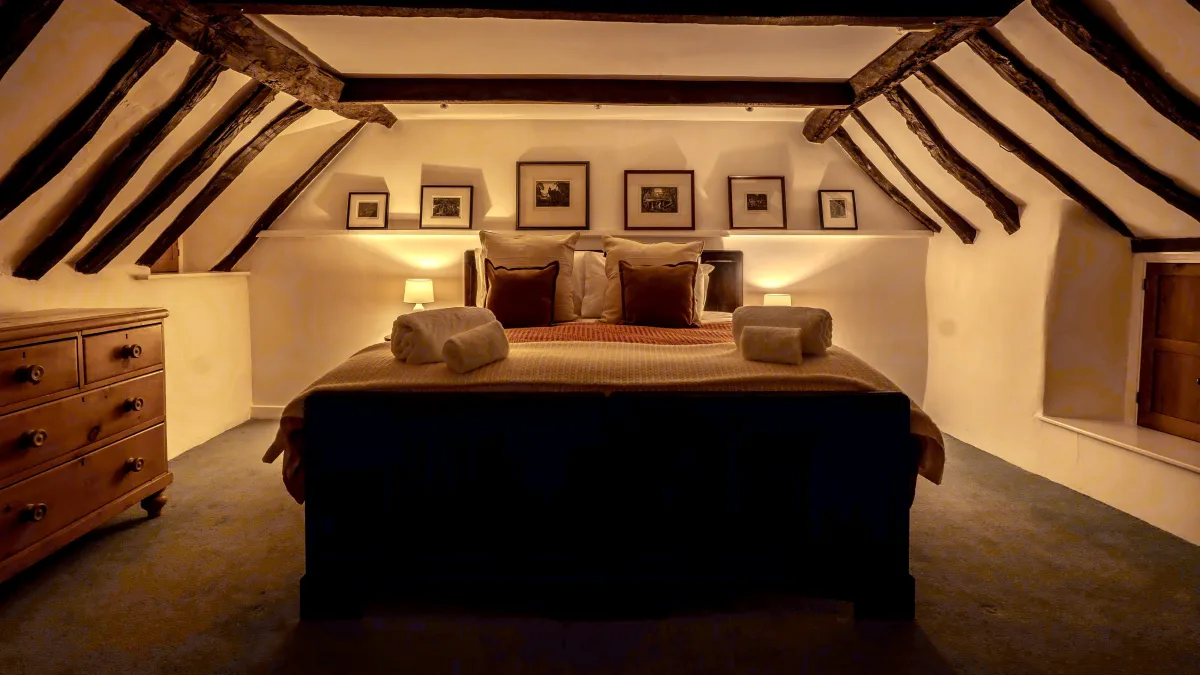
Behind the headboard, a narrow plaster ledge carries a row of framed prints: a hand-signed wood engraving titled How still it is by S. Cave, vintage black-and-white expedition photographs of snow-covered ship decks and sledge dogs, and a few quiet landscapes. Higher up the slope, an old ice-axe hangs between the beams.
They are the kind of pictures you find yourself looking at again each morning, and together with the carved bedstead and the well-worn furniture, they give the room a character that feels collected over years rather than decorated all at once.
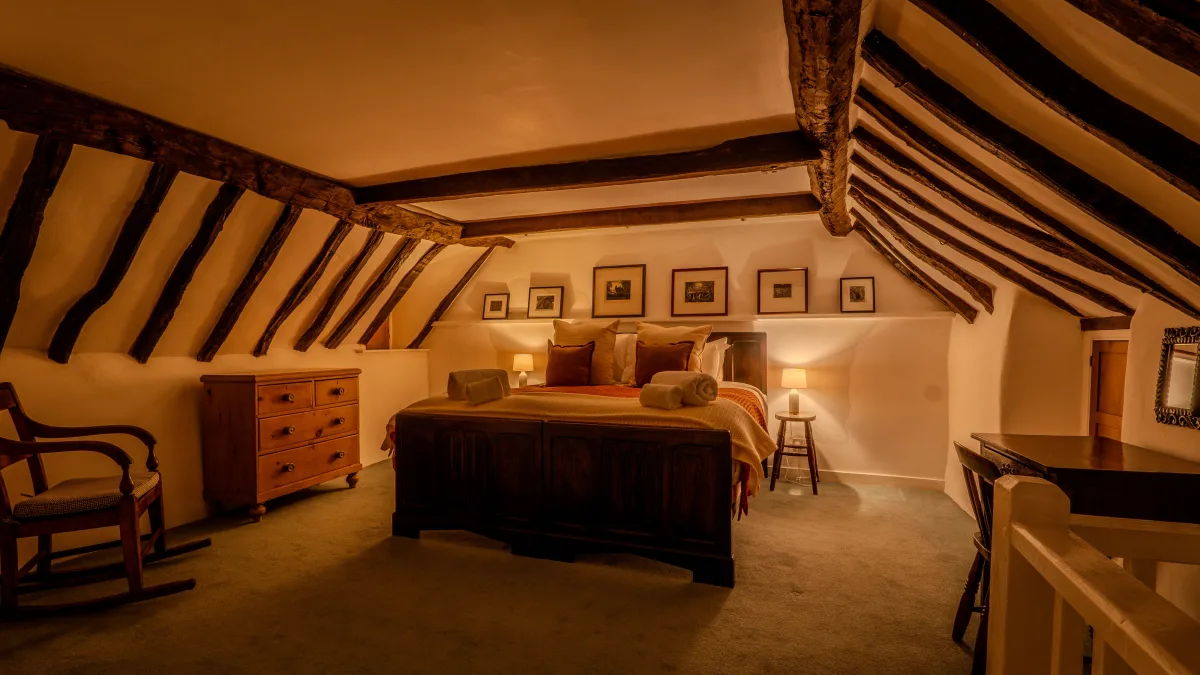
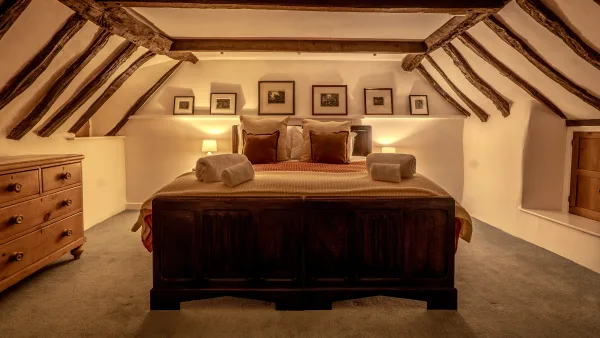
When the light goes, the room changes again. The bedside lamps come on low, their amber filament bulbs throwing a warm wash up into the rafters and across the lime plaster. The village outside falls to nothing more than an owl or the wind in the thatch overhead.
It is properly dark here, properly still. Less than a mile from Soho Farmhouse and yet a world away once the shutters are drawn. The kind of room where you sleep long and well, and wake slowly to birdsong and the first grey light coming through the casement.
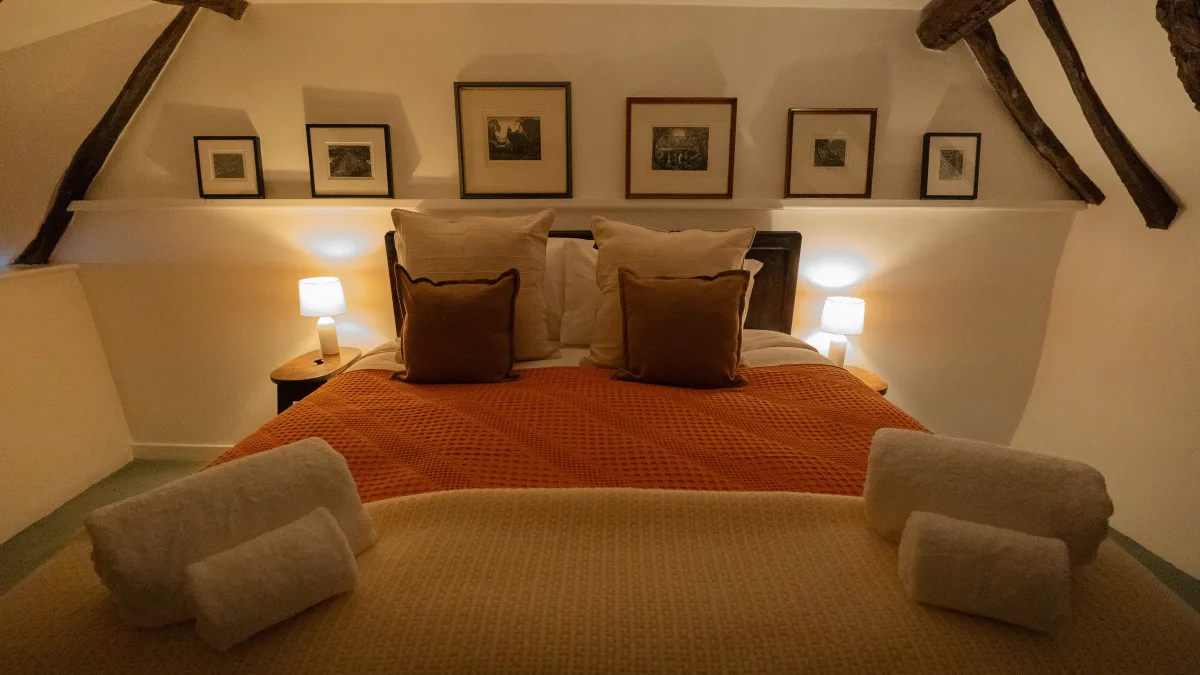
Fresh white towels are rolled and waiting on the turned-down bed. Luxury linen throughout, changed and laundered for every stay, with extra blankets in the dresser if the night turns cold.
The principal bedroom is one of four at Well Cottage, sleeping seven in all, less than a mile from Soho Farmhouse. Check dates and book on Airbnb.