The Single Room
The seventh bed: a snug little room tucked off the landing, beamed and lime-washed, just right for a child or a guest travelling alone.
The seventh bed: a snug little room tucked off the landing, beamed and lime-washed, just right for a child or a guest travelling alone.
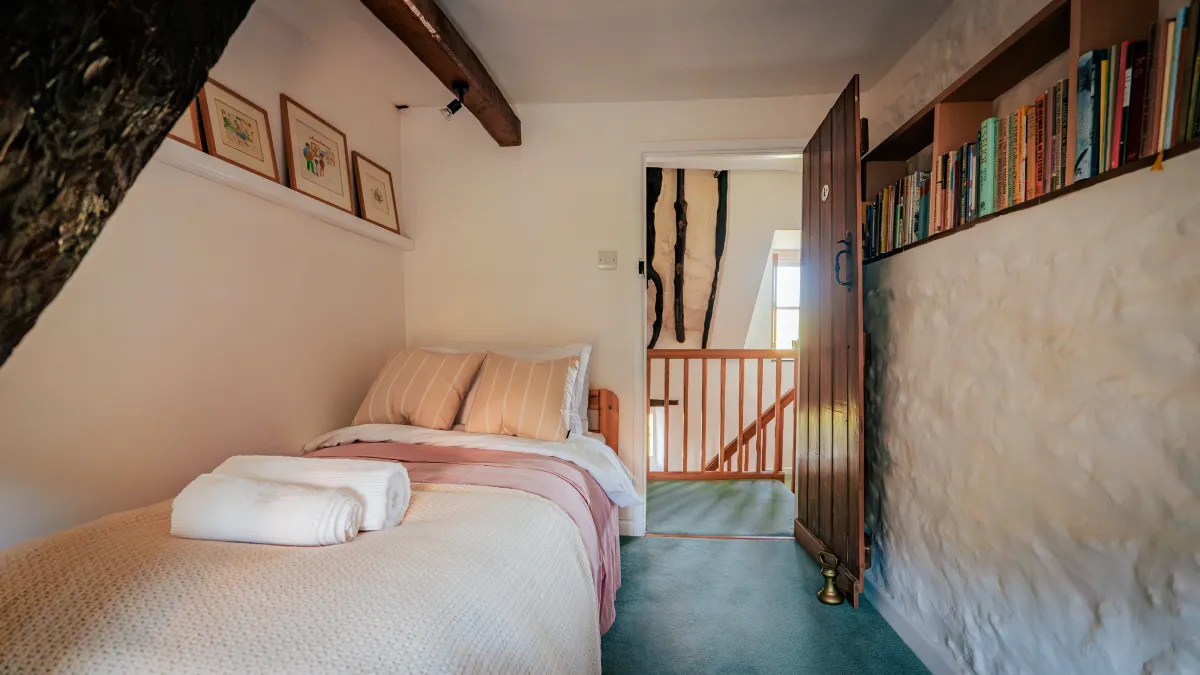
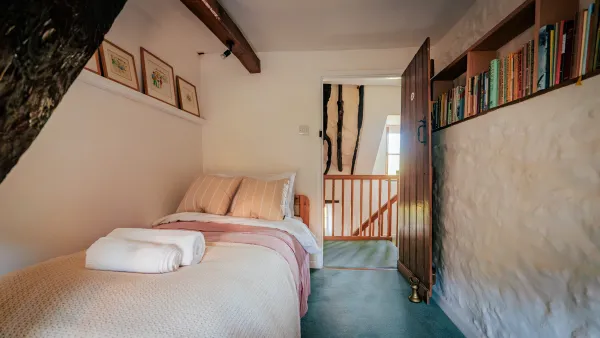
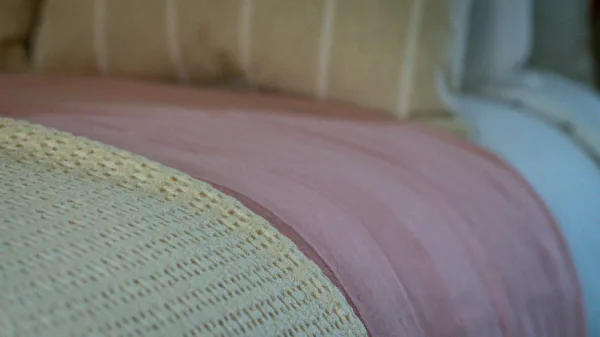
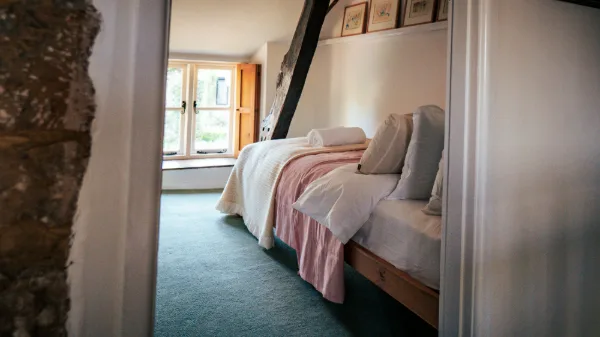
Open the dark plank door off the upstairs landing and the single room gathers you in. It is the cottage's smallest bedroom, but that is exactly the point. The walls are soft white lime plaster, and one is left as bare Cotswold stone, lumpy and lovely under the hand. A great gnarled oak beam leans across the ceiling like the rib of an old ship, and beneath it the single bed sits low and snug, made up in dusky-pink sheets with a striped pillow and a cream waffle blanket folded at the foot.
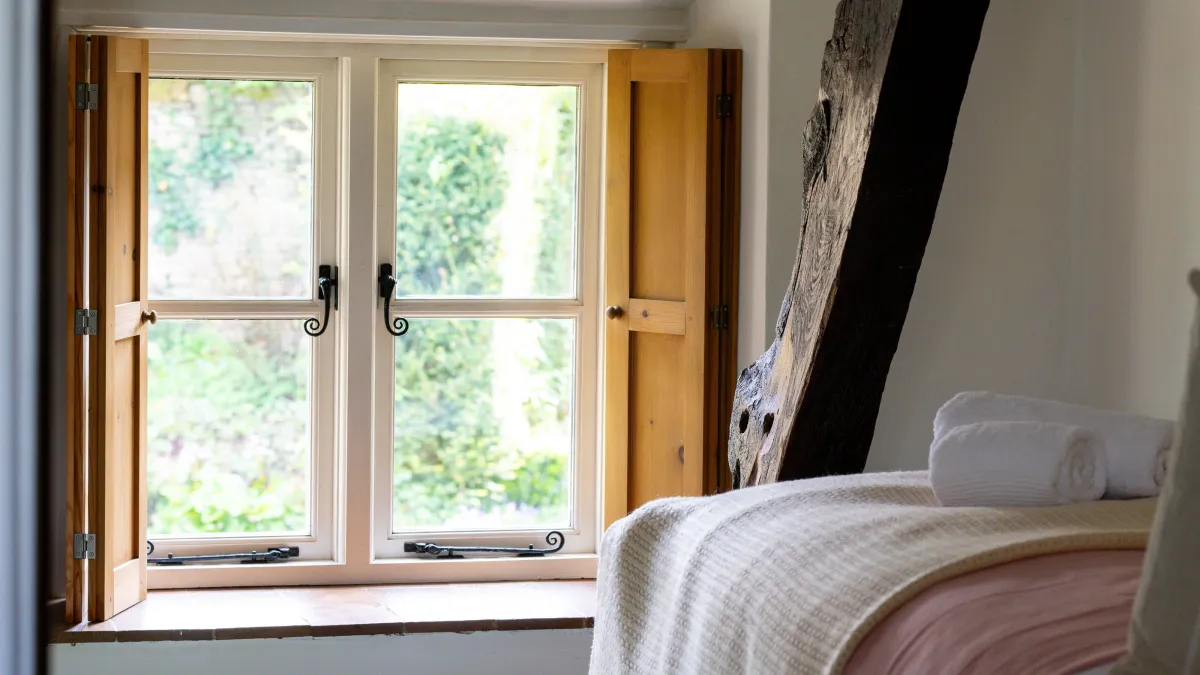
An enamel number 14 is fixed to the plank door, and this, together with the low beams and the den-like proportions, is why children take to it at once. They close the iron latch and the room is theirs. Above the headboard hang a handful of drawings James made as a boy in this house, between the ages of seven and twelve, since framed — a fitting thing to find in the room every child claims first. The floorboards give gently underfoot, and in the morning the deep casement window lets in the first pale light through pine shutters that fold right back against the stone.
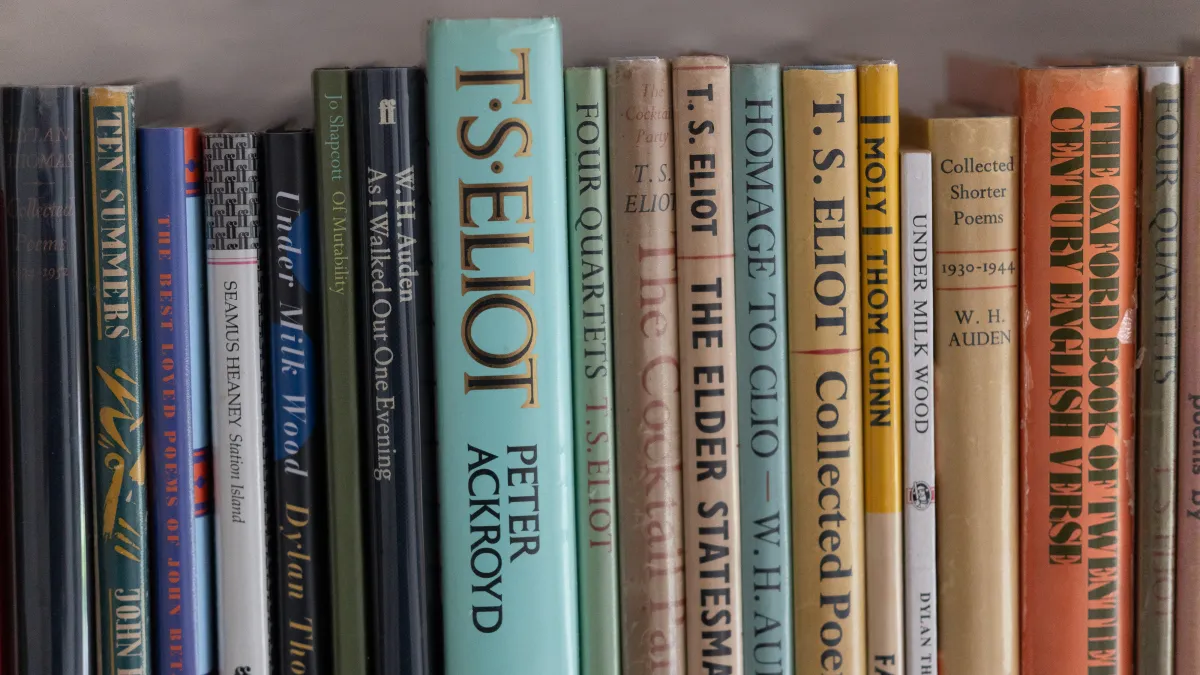
A narrow built-in shelf sits beside the doorway, stacked with poetry: Eliot, Auden, Heaney, Dylan Thomas. They are not decoration. This is the kind of room that makes you stay in bed a little longer, and the books are there for exactly that reason.
The light comes in sidelong through the shutters, the house stirs slowly around you, and there is nothing at all that needs doing before breakfast. Pick one up and read three poems before you hear the kettle downstairs.
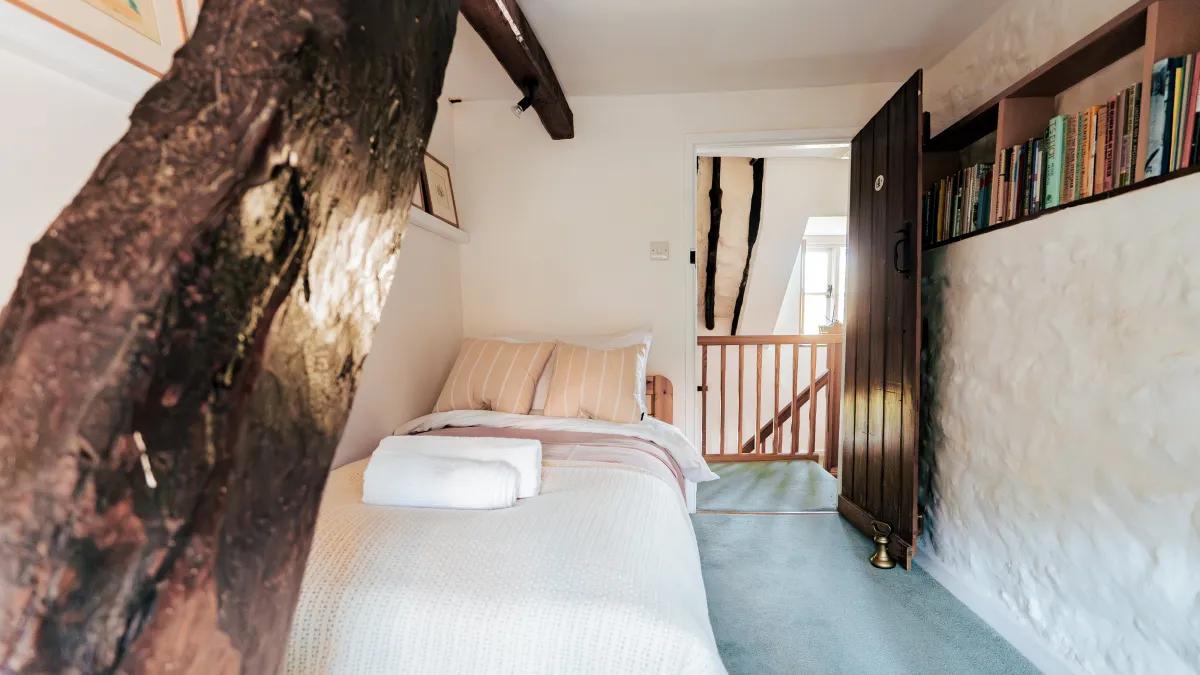
The oak beam that crosses this room is one of the cottage's finest, thick as a man's torso, silvered and split with age, following the line of the roof exactly as the carpenter set it in the 1700s. It is close enough to touch from the pillow, and you can run your hand along the adze marks and feel the grain of the original timber.
Beneath it the bare stone wall curves away, unplastered and rough, every lump and hollow left as the mason found it. The contrast of raw Cotswold stone against the soft lime plaster opposite gives the room a texture that no amount of decorating could replicate. This is a room that was built, not designed.
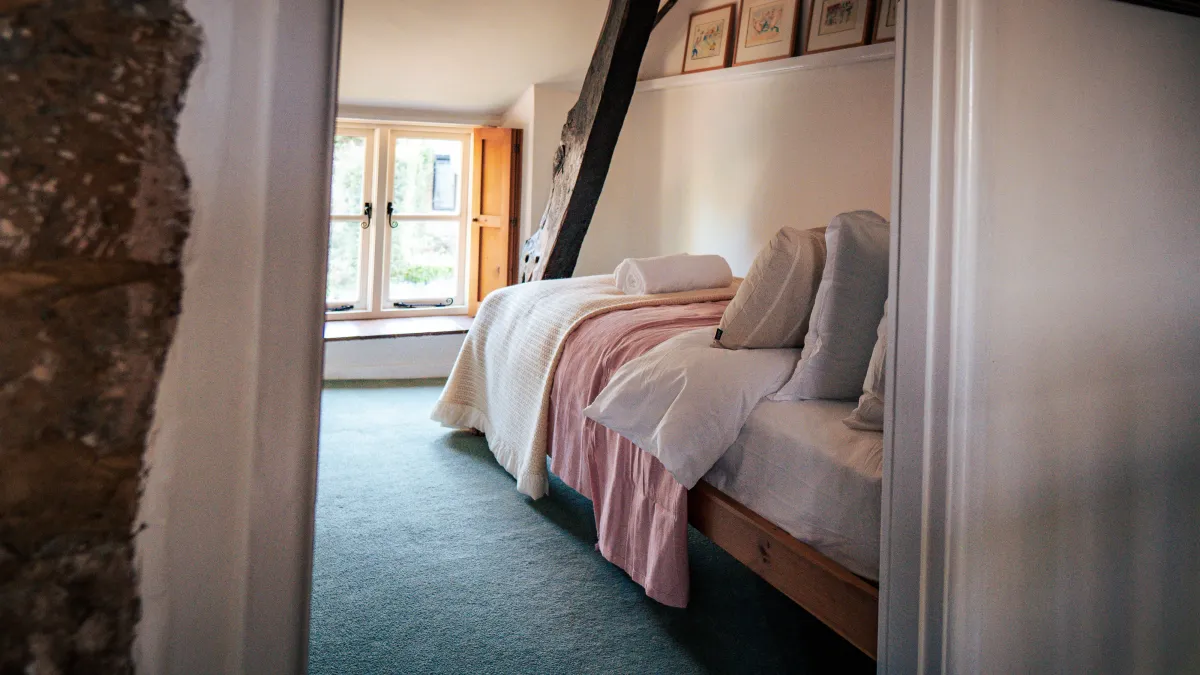
Pine shutters fold back from the deep window onto greenery and birdsong, and in the morning the room catches the first low light. The view is of the garden edge and the quiet green beyond, and on a still day you can hear nothing at all except a wood pigeon and the wind moving through the eaves.
It is the seventh bed at Well Cottage, the one that tips a family of six into a family of seven or gives a solo traveller a proper room of their own. Close enough to the other bedrooms to feel connected, far enough off the landing to be genuinely private once the iron latch clicks shut.
Four bedrooms, sleeps seven, less than a mile from Soho Farmhouse. Check dates and book on Airbnb.