Ledwell
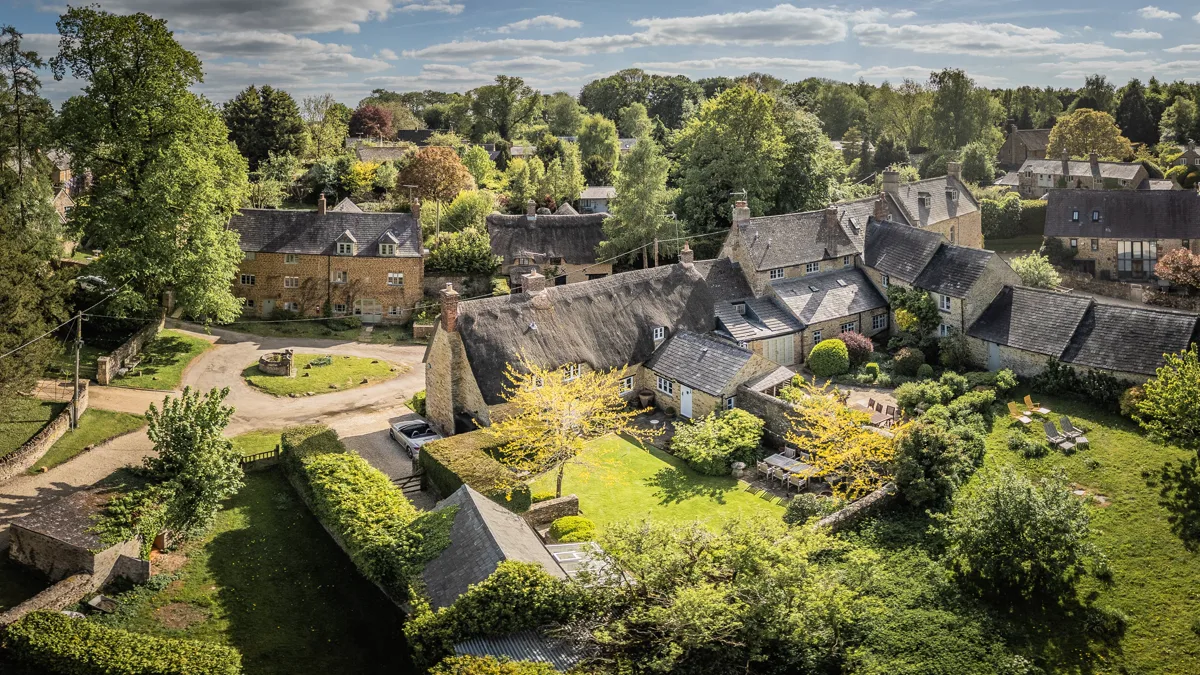
The hamlet where Well Cottage stands: a handful of honey-stone houses, single-track lanes and a rare, settling quiet.
The hamlet where Well Cottage stands: a handful of honey-stone houses, single-track lanes and a rare, settling quiet.
Ledwell is where Well Cottage stands, so this is the little corner of north Oxfordshire you will actually wake up in. It is a hamlet in the parish of Sandford St Martin, a scattering of honey-coloured ironstone houses along a couple of single-track lanes, with Cockley Brook running quietly through the middle of it. There is no pub, no shop and no church here: the parish church of St Martin sits over at Sandford St Martin, about a mile to the south, and everything else you might need is a short drive away. What Ledwell has instead is quiet, and a great deal of it. On a still afternoon the loudest thing you will hear is a wood pigeon or the brook, which is fitting, because the name is thought to come from the Old English for "noisy spring."
We love it here precisely because so little happens. The houses are built from the warm, lichen-spotted local stone you find right across this stretch of country, the hedgerows are thick with hawthorn and elder, and the verges fill with cow parsley in spring before the field margins turn to stubble in autumn. You can walk out of the door and not meet another soul for twenty minutes. It takes most guests a day or so to properly notice the silence, and then it becomes the thing they remember. If you have come looking for a base that is genuinely rural rather than rural-adjacent, this is it.
Ledwell is the kind of place you can drive through without realising you have arrived. The lanes are barely wide enough for one car, the sky feels enormous, and the cottage windows look out over nothing but green. It sits within a conservation area of older stone cottages, so the character of the hamlet is protected and unlikely to change. For guests, that means the view you have on the first evening is the view you will have on the last, and the loudest disturbance is usually the weather.
The best thing about staying somewhere this small is that the countryside starts at the gate. Footpaths and bridleways thread out of Ledwell in every direction, across farmland and along the brook, and you rarely need the car to find a good hour's loop. We have pulled our favourites together on the walks from the door page, and several of them run through or past the Great Tew estate next door, finishing conveniently near a pub.
The clever part of Ledwell is that all this peace comes without being cut off. You are less than a mile from Soho Farmhouse, so members can be at the spa or the pool in a few minutes. Great Tew, the next village over, has the Falkland Arms, one of the best thatched pubs in the county, roughly a forty-minute walk across the fields or five minutes in the car. And the market town of Chipping Norton, which covers the supermarket, pharmacy and post-office side of a stay, is about twenty minutes away by the back lanes. Here is how we tend to use the position:
You are already here. Well Cottage is in Ledwell itself: a thatched cottage sleeping seven, less than a mile from Soho Farmhouse.