Bibury
William Morris called it the most beautiful village in England: medieval weavers' cottages, a clear stream and a mossy churchyard.
William Morris called it the most beautiful village in England: medieval weavers' cottages, a clear stream and a mossy churchyard.
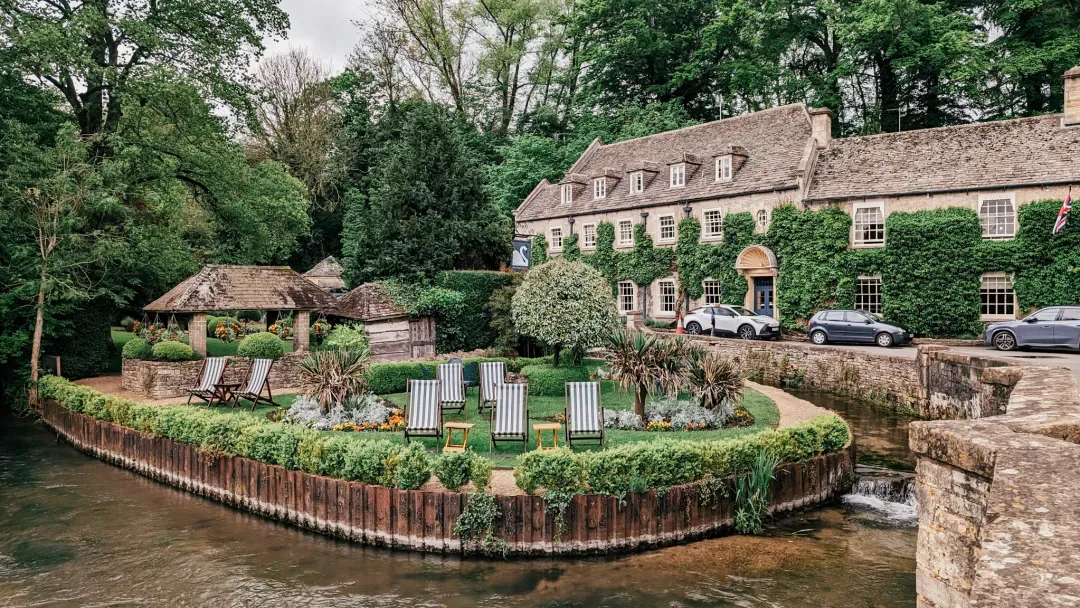
The first thing you notice is the river. The Coln runs through the village clear and unhurried, the kind of water that catches every shift of light. On one bank stands Arlington Row, a terrace of weavers' cottages built of the local honey-coloured stone, their steep-pitched roofs soft with lichen. The row was built as a monastic wool store in the fourteenth century and converted into cottages for weavers a couple of hundred years later, and it is now cared for by the National Trust. It remains one of the most photographed scenes in England, though in person it is quieter and more affecting than any image prepares you for. Opposite, across a low footbridge, lies Rack Isle, the water meadow where cloth was once hung to dry on wooden racks after fulling. It is marshy and full of wildflowers in summer, a gentle counterpoint to the order of the Row.
It was William Morris, walking here in the late nineteenth century, who called Bibury “the most beautiful village in England,” and remarkably little has changed to challenge that verdict. We send guests here for exactly the reasons Morris admired it: the honesty of the stone, the unbroken line of cottages, the church that has been gathering moss since the Saxons. It is a short outing rather than a full day, but it pairs beautifully with a longer loop through the wool towns to its east, and it is the one Cotswold view that even seasoned visitors stop to photograph.
Bibury rewards a slow wander more than a checklist, but there are a handful of things we would not want you to miss.
We will not pretend Bibury is a secret. It is small, famous and firmly on the coach-tour circuit, and from mid-morning through the afternoon in high season Arlington Row can be genuinely busy, with visitors queuing for the same photograph and cars nosing for the handful of roadside spaces. None of this ruins the place, but it does change it. Our honest advice is to go early or go off-season. Arrive before nine or ten and you can have the Row and the water meadow largely to yourself; come on a weekday in autumn or winter and it becomes another village entirely, the Coln misting in the valley and the golden stone taking on a quality no photograph has quite managed to catch. Parking is limited to roadside spaces along the B4425 and a small area near the trout farm, so an early start earns you a place as well as the quiet.
Bibury sits about forty-five minutes from Well Cottage by car, west into Gloucestershire, deep enough to feel like a proper outing. Because the village itself asks for only an hour or two, we usually pair it with somewhere else along the way. Burford, with its long sloping high street and antique shops, is about fifteen minutes back towards the cottage and makes an easy lunch stop. Bourton-on-the-Water, the low bridges of its own little river lined with tea rooms, is a natural companion if you have children in tow. In the village, The Swan Hotel sits right on the river and does a reasonable lunch, while The Catherine Wheel on Arlington is a smaller, more characterful pub with flagstone floors. For the full spread of ideas within a short drive, our things to do guide gathers the gardens, market towns and attractions we point guests towards most often.
All of this on the doorstep, and your own thatched cottage to come home to. Sleeps seven, less than a mile from Soho Farmhouse.