Oxford Covered Market
The beating heart of Oxford since 1774: cheesemongers, butchers and coffee roasters, free to wander.
The beating heart of Oxford since 1774: cheesemongers, butchers and coffee roasters, free to wander.
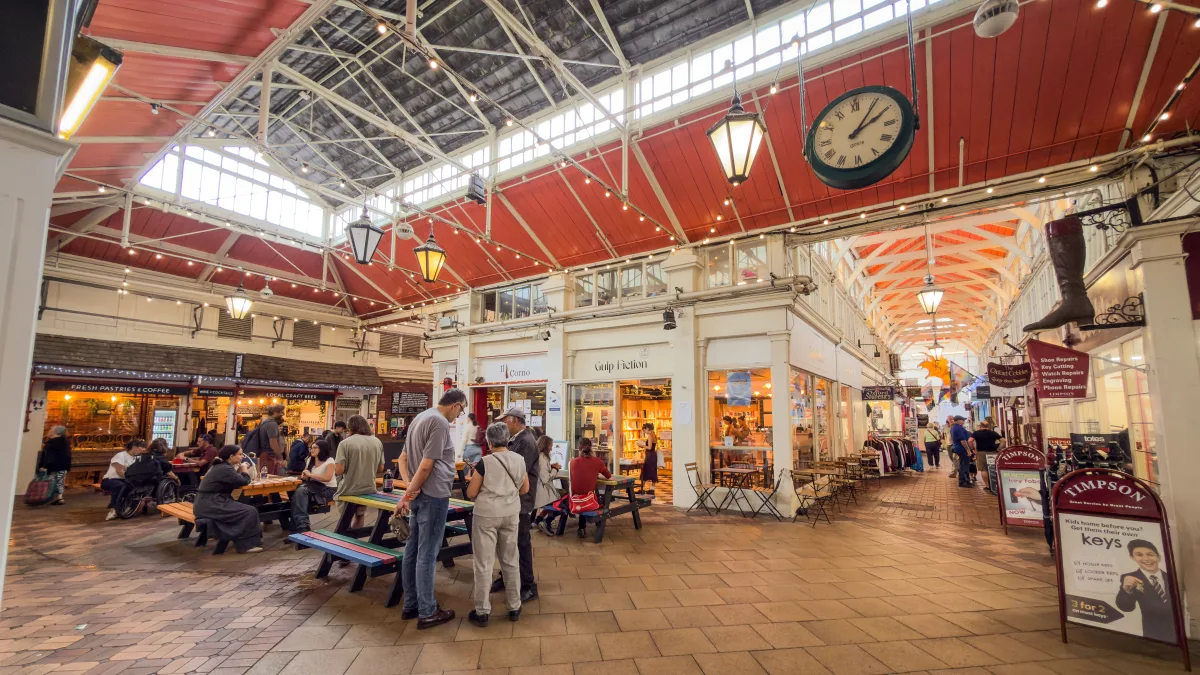
When we take a day out in Oxford from the cottage, the Covered Market is almost always where we end up drifting. It sits right in the centre, tucked between the High Street and Market Street with entrances on both, and it has been trading on the same spot since 1774, when the city first moved its butchers and grocers in off the streets. Step through one of the arched doorways and you're in a labyrinth of narrow avenues under a high glass-and-timber roof, with more than fifty independent traders packed in around you. It's free to wander, so there's no pressure to buy anything; we'll happily lose half an hour just looking before we decide what to eat.
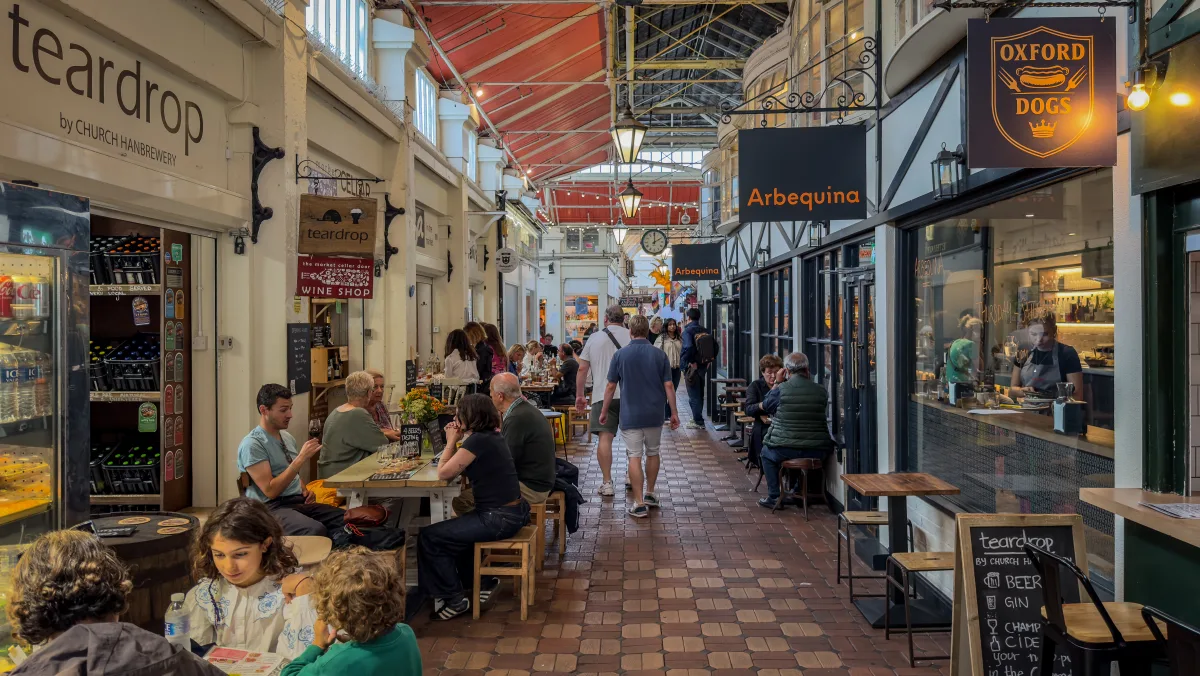
The range is genuinely surprising for somewhere so compact. There are old-fashioned butchers still trimming cuts to order, a proper florist, a fishmonger, cheese and charcuterie counters, chocolatiers and a sweet shop or two, alongside barbers, cobblers and independent clothing stalls. The market has become a bit of a foodie destination over the years, and for good reason: this is where you'll find the famous cookie and coffee spots that get talked about online, plus cafés and hot-food traders doing everything from a slow brunch to a quick lunch on the hoof. We usually treat it as our midday stop on a bigger Oxford day, then carry on to the colleges and museums with a coffee in hand.
The market we wander today began as a tidy-up. In 1774 the city cleared the butchers, grocers and traders off its open streets and gave them a single covered home between the High Street and Market Street — and for the best part of two centuries it was Oxford's larder. More than anywhere, it fed the colleges: their kitchens and their scouts came in daily for meat, game, fish, fruit and flowers, and the market's butchers and poulterers built their trade around them.
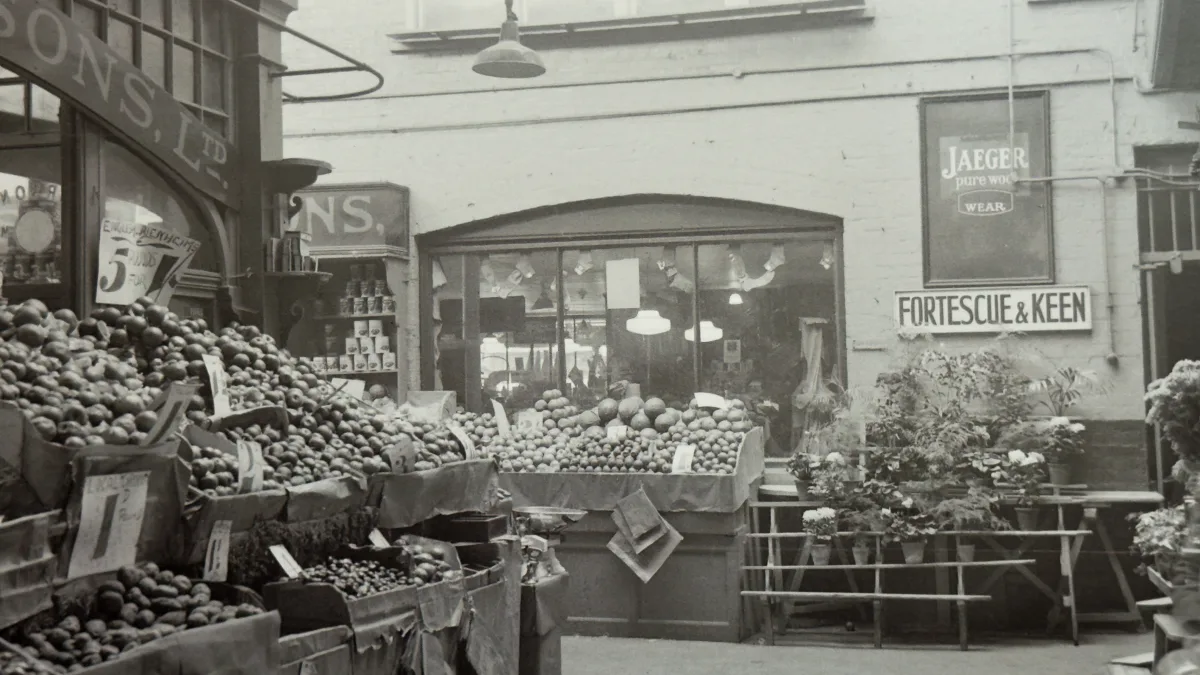
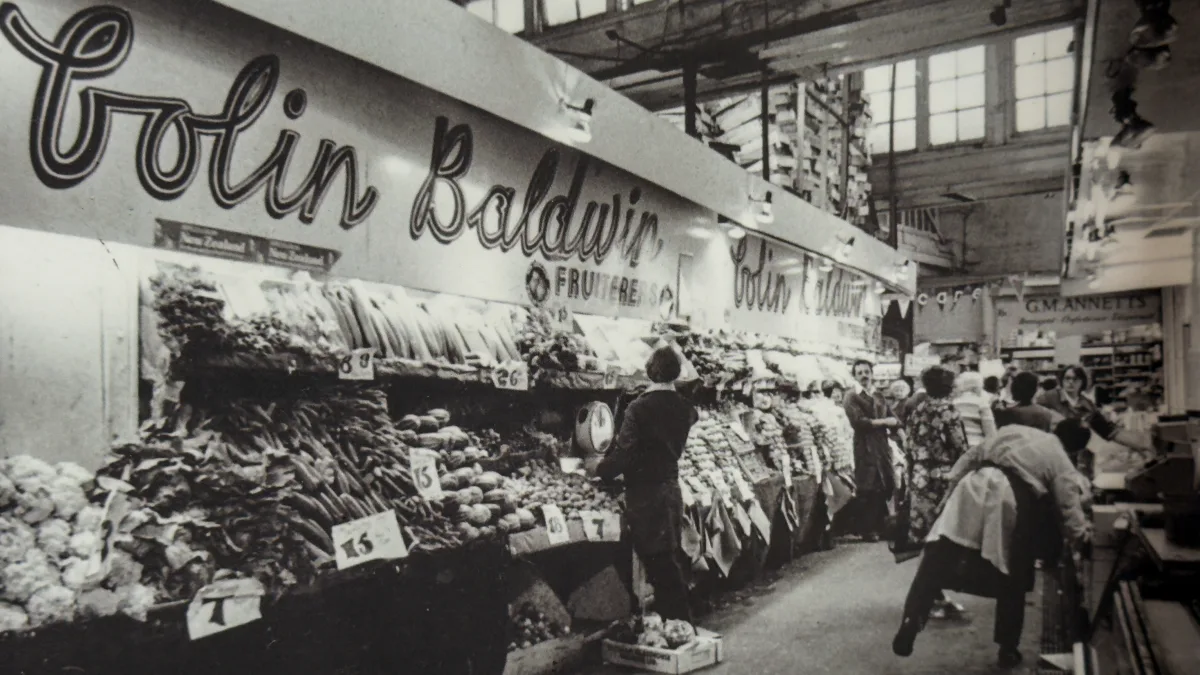
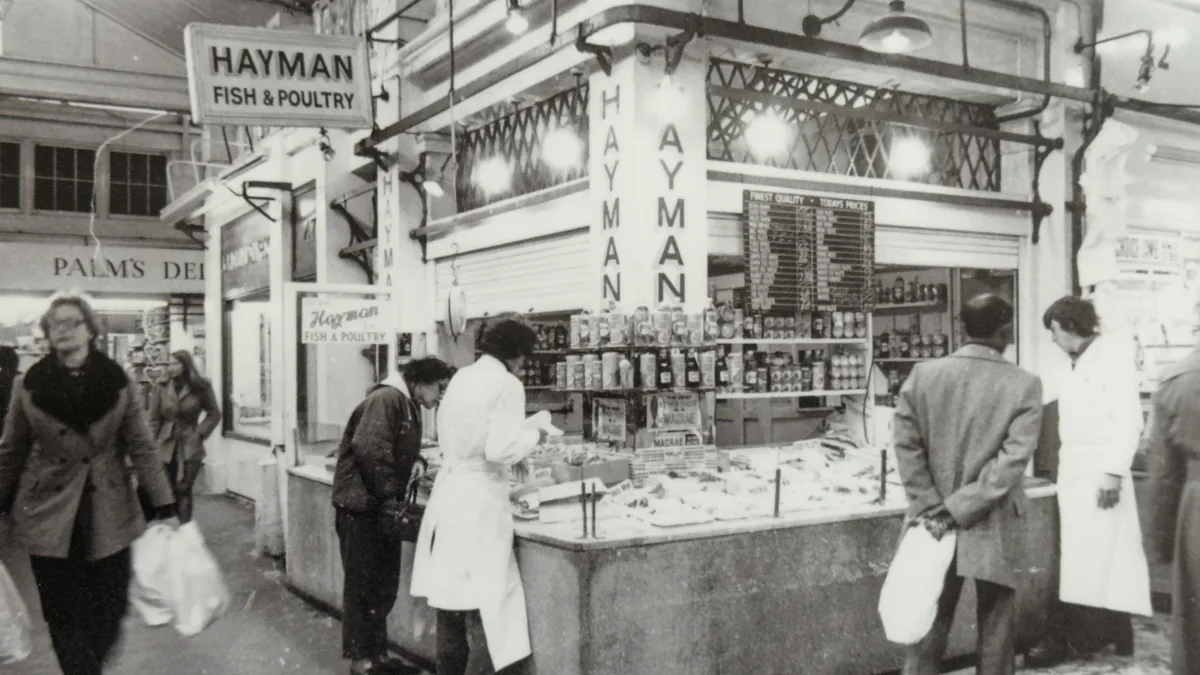
The finest of it went to the high tables, where the fellows and dons dined — the prime cuts, the hung game, the best of the season — while the rest supplied the town. The old photographs below catch that working market across the twentieth century: fruiterers stacking their stalls shoulder-high, fishmongers and butchers trading under the same glass roof that shelters the cafés today.
A greengrocer's stall in the early 1900s, produce stacked to the rafters.
Colin Baldwin's fruit and veg stall, a market fixture for decades.
Hayman's fish and poultry counter, next to Palm's Deli.
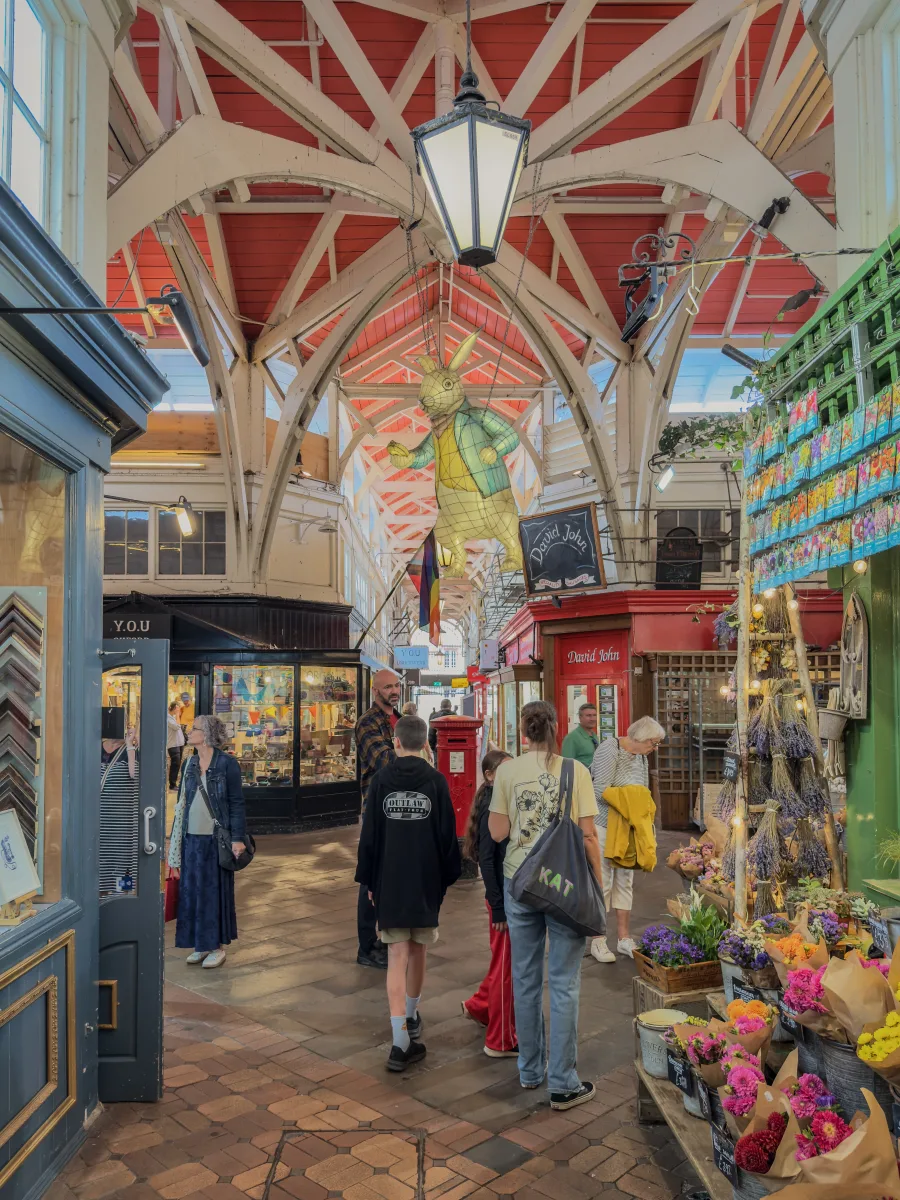
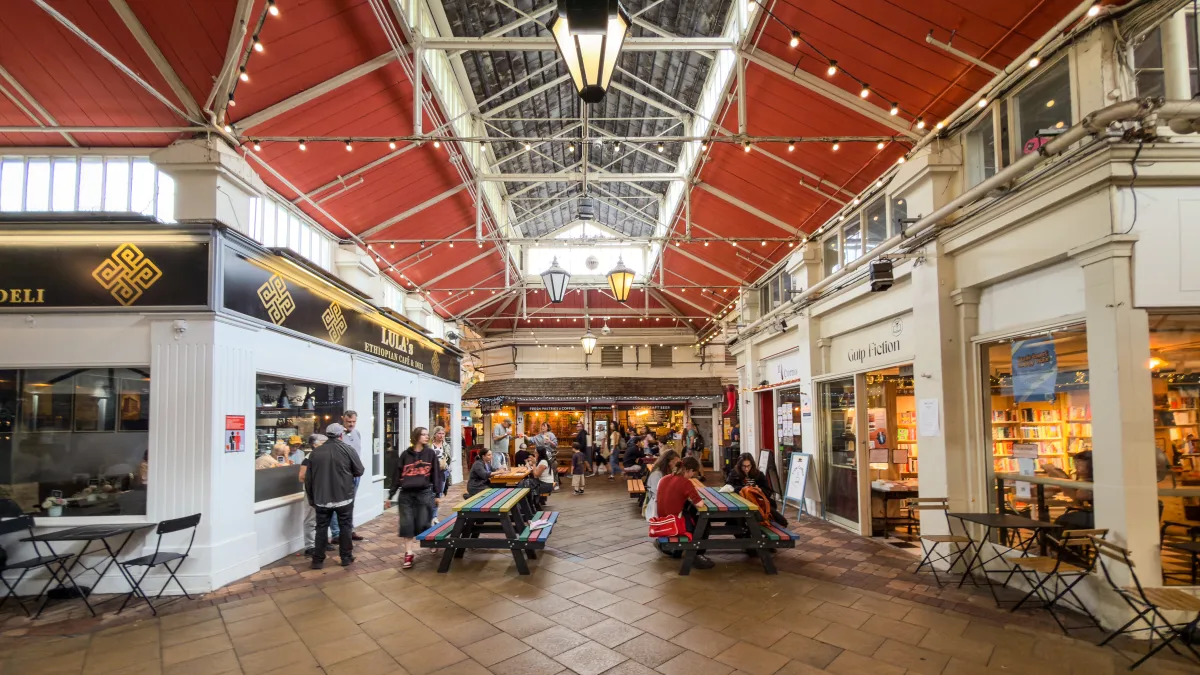
Two hundred and fifty years on, it is still a maze of narrow avenues under a high glass-and-timber roof, and still stubbornly independent. Old trades — butchers, a cobbler, a florist — sit alongside cookie counters, coffee roasters and a bookshop or two.
Look up, and the giant papier-mâché figure hanging over the avenues is the White Rabbit from Alice's Adventures in Wonderland — a nod to the story's Oxford roots, dreamed up by a Christ Church don just down the road — and if you keep your eyes open, other characters from the tale turn up around the market too. A red Victorian pillar box still stands among the flowers, and on a good day the cafés spill their tables right out into the aisles.
The main hall, under its red-timbered roof.
The market clock, near the bookshop and the old cobbler.
Here's roughly how a visit shakes out for us, whether we're after lunch, a picnic to take back, or just a browse between other stops.
The market is open through the week, with individual traders keeping their own hours, so it's worth arriving mid-morning when everything is up and running. Thursday to Saturday it stays open into the evening, which turns the place into something closer to a Continental night market, with street food and a livelier crowd. Saturdays around late morning are our favourite for atmosphere; a weekday is calmer if you'd rather take your time. Do check ahead if you're making a special trip for one particular trader, as opening times shift.
From the cottage it's about forty minutes by car into central Oxford. Parking in the middle of the city is tight and expensive, so we almost always use one of the park-and-rides on the ring road and let the bus drop us a short walk from the market. Once you're there everything worth seeing is within a few streets: the Ashmolean Museum, the Bodleian and Radcliffe Square, and plenty of good pubs. When we want a proper lunch rather than a market bite, The Bear Inn is one of the oldest pubs in the city and only minutes away. For the wider picture, our guide to things to do and see pulls together the rest of an Oxford day.
“Pick up a sourdough loaf, some local cheese and charcuterie from the market, then bring it all back to the cottage garden for lunch. That's a properly good afternoon.”
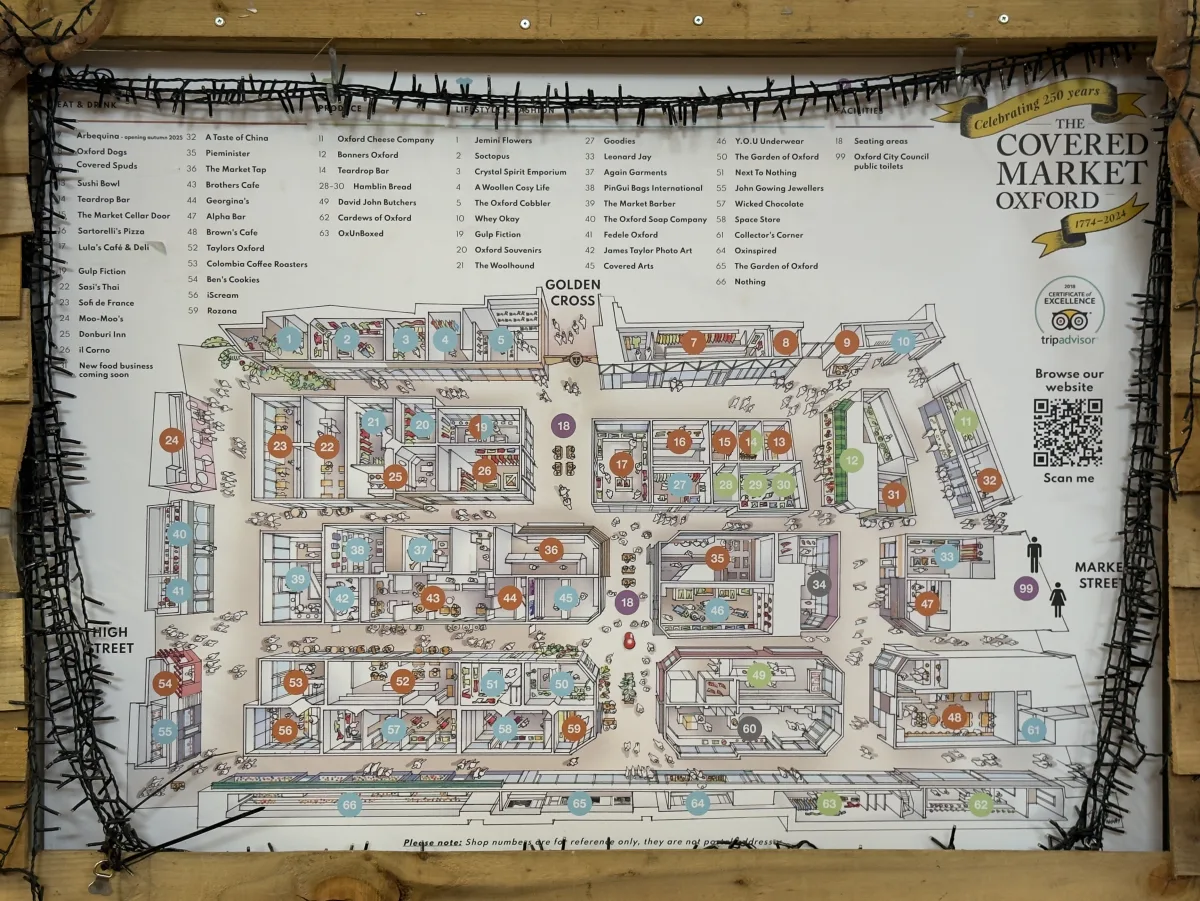
The market's 250th-anniversary plan (1774–2024): around sixty independent stalls threaded between three entrances. Easy to wander, easier still to get pleasantly lost.
All of this on the doorstep, and your own thatched cottage to come home to. Sleeps seven, less than a mile from Soho Farmhouse.