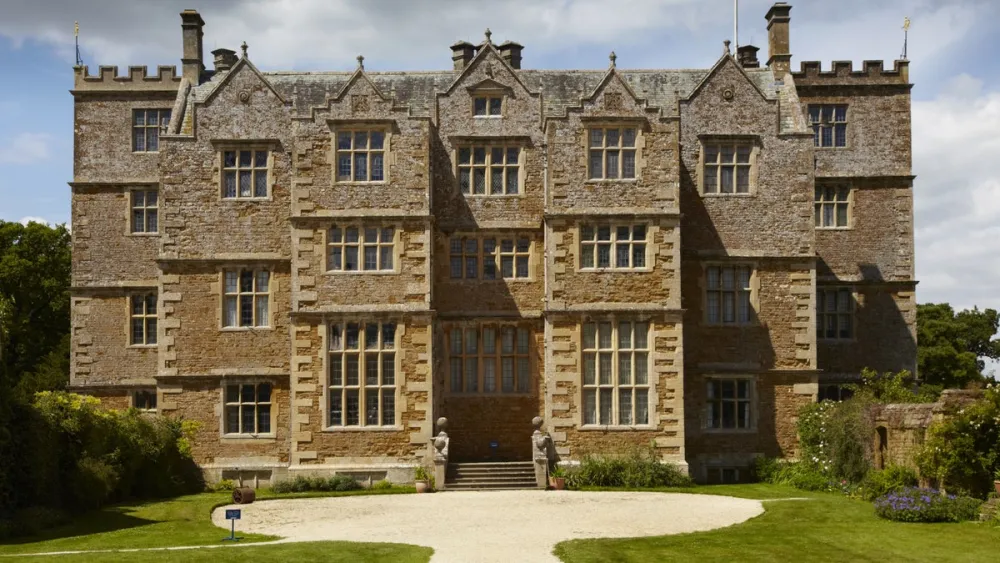
Chastleton House
A Jacobean house near Moreton-in-Marsh the National Trust deliberately left alone, furnished as it was for four hundred years.
A Jacobean house near Moreton-in-Marsh the National Trust deliberately left alone, furnished as it was for four hundred years.
Most of the great houses we take guests to have been buffed to a high shine. Chastleton is the exception, and it is the reason we keep coming back. Walter Jones, a wool merchant grown rich on Cotswold fleeces, built the house between 1607 and 1612 on the Oxfordshire and Gloucestershire border, just outside Moreton-in-Marsh. What makes the place extraordinary is what happened next: essentially nothing. His family stayed for nearly four centuries, growing gradually poorer and never quite able to afford the fashionable renovations that swept through so many English houses. By the time the National Trust took it on in 1991, the rooms were layered with the quiet residue of generations, and the Trust made the unusual choice to conserve rather than restore.
So you see it much as the last of the family knew it. Faded tapestries hang where they have always hung. Paint peels gently in the corners, and sunlight falls through old glass onto threadbare rugs. A long gallery runs the whole length of the top floor under a barrel-vaulted ceiling, and out on the front lawn the game of croquet found its footing: it was a member of the family, Walter Jones Whitmore, who codified the modern rules here, publishing them in 1868. It is a small property, rarely crowded, and the volunteers who show you round tend to know every corner and every story. Where a grander house rushes you past its treasures behind rope, here you can stand in a room and simply take in how a family actually lived in it. We always leave feeling we have stepped sideways in time rather than backwards. It sits about twenty-five minutes from the cottage, an easy run up towards Moreton, and it makes a lovely slow half-day rather than a full-on day out.
Chastleton is a ticketed National Trust property, free to members and paid for everyone else, and it keeps limited seasonal hours: broadly Wednesday to Sunday from spring into autumn, opening in the early afternoon. Because the house is lit only by natural light and closes earlier than most, and because visitor numbers are deliberately capped to protect the fragile interiors, entry is by timed slot on a first-come basis. In peak summer those slots go quickly, so it is well worth booking ahead. Always check the current opening days, times and ticketing on the National Trust page before you set off, and give yourself the earlier end of the afternoon so you are not rushed through the last rooms.
Chastleton pairs well with the market town on its doorstep: Moreton-in-Marsh is a few minutes on, good for lunch, a browse and a Tuesday market if the timing lands. For something older still, the Rollright Stones sit on the ridge between here and Chipping Norton, a windblown stone circle that makes a fine contrast to the hush of the house. If you would rather build a wider itinerary, our guide to things to do in the area runs from ancient sites to grand gardens and everything between.
“Chastleton is the house that time genuinely forgot. No velvet ropes, no gift-shop gloss. Just room after room of things left exactly where they were, and a silence you can feel in your shoulders.”
All of this on the doorstep, and your own thatched cottage to come home to. Sleeps seven, less than a mile from Soho Farmhouse.