The Library
A vaulted room lined with over a thousand books, a writing desk facing the garden, and instruments waiting to be played.
A vaulted room lined with over a thousand books, a writing desk facing the garden, and instruments waiting to be played.
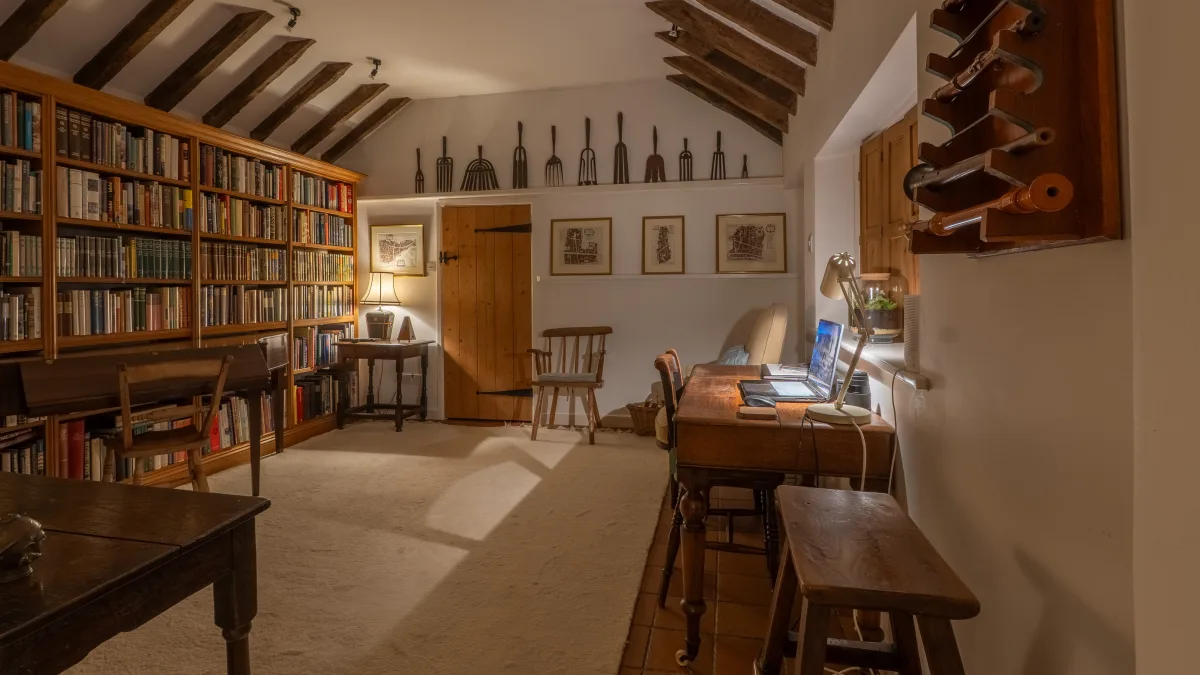
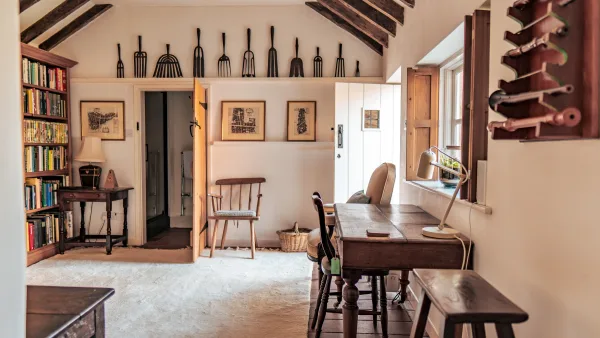
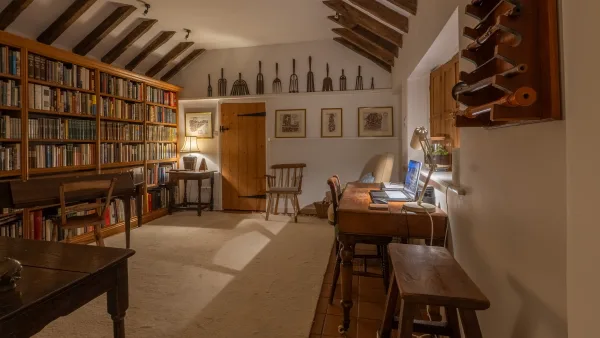
Push open the plank door and the room rises away from you: a high, vaulted ceiling crossed by dark old beams, and walls given over almost entirely to books. There are well over a thousand of them here, arranged loosely by subject across shelves that climb from floor to rafters. History, biography, gardening, natural history, art, poetry, and a deep run of paperbacks for an afternoon that asks nothing of you.
By evening a single lamp turns the room golden, and the spines on the far wall blur into warm colour. It is a room that feels bigger than it is, partly because the vault draws your eye upward and partly because of the sheer weight of reading on offer. Pull something down, take a seat, and the rest of the house falls quiet.
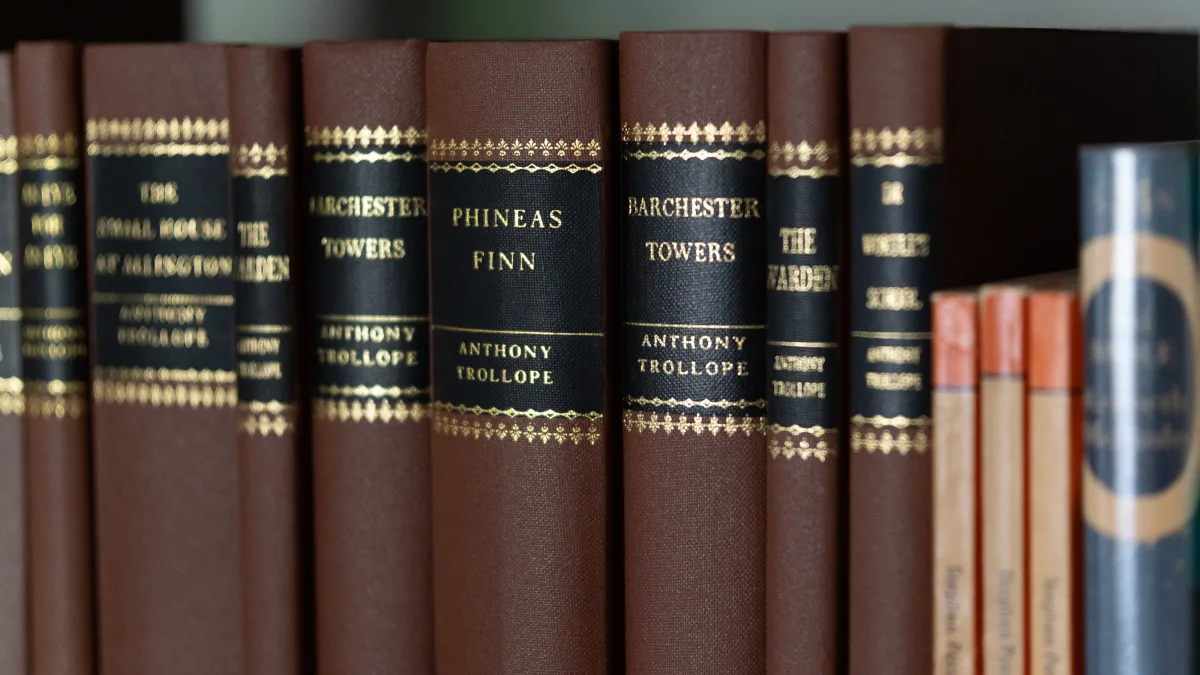
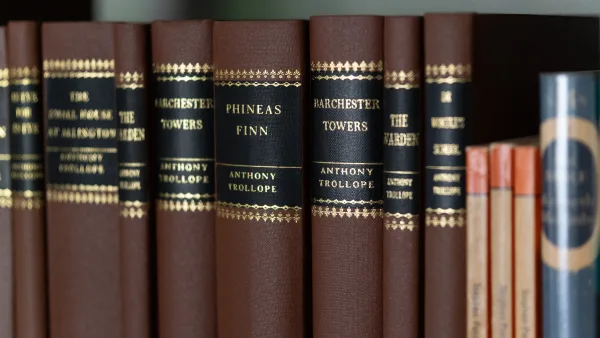
A whole shelf of Trollope in gilt-lettered cloth: Barchester Towers, Phineas Finn, The Warden. The kind of long Victorian novel you settle into for a week of evenings. Beside them sit runs of Dickens and Hardy, shelves of modern fiction, and enough cookery books to keep a wet afternoon busy.
The collection has been built over decades rather than curated for show, and it reads that way: dog-eared paperbacks next to first editions, a Pevsner guide to Oxfordshire next to a Jilly Cooper. Guests tend to leave a book on the arm of the chair and come back to it each evening.
There is a good run of Colin Dexter’s Inspector Morse novels among them, too, set in the Oxford just down the road. They make fitting company for a stay, and a natural prelude to a drink in the Morse Bar at the Randolph. And should all this reading leave you wanting a book to carry home, Oxford has the perfect answer: the antiquarian department at Blackwell’s, whose upper floor of rare and first editions is the place to hunt down something really special.
Somewhere among the spines you’ll find the old English ghost-story writers, M. R. James chief among them — the Cambridge antiquary who set his gentle, bookish hauntings in libraries and old inns much like this one. It makes fitting reading for a room this age, and there is a quiet nod to him about the house: the bedroom doors wear little enamelled numbers, 12, 14 and 15, with no 13 among them, in the old superstitious fashion of the inns James liked to write about.
Nothing more sinister than that — just a good excuse, on a dark evening with the fire lit, to pull a collected M. R. James down from the shelf and read one aloud.
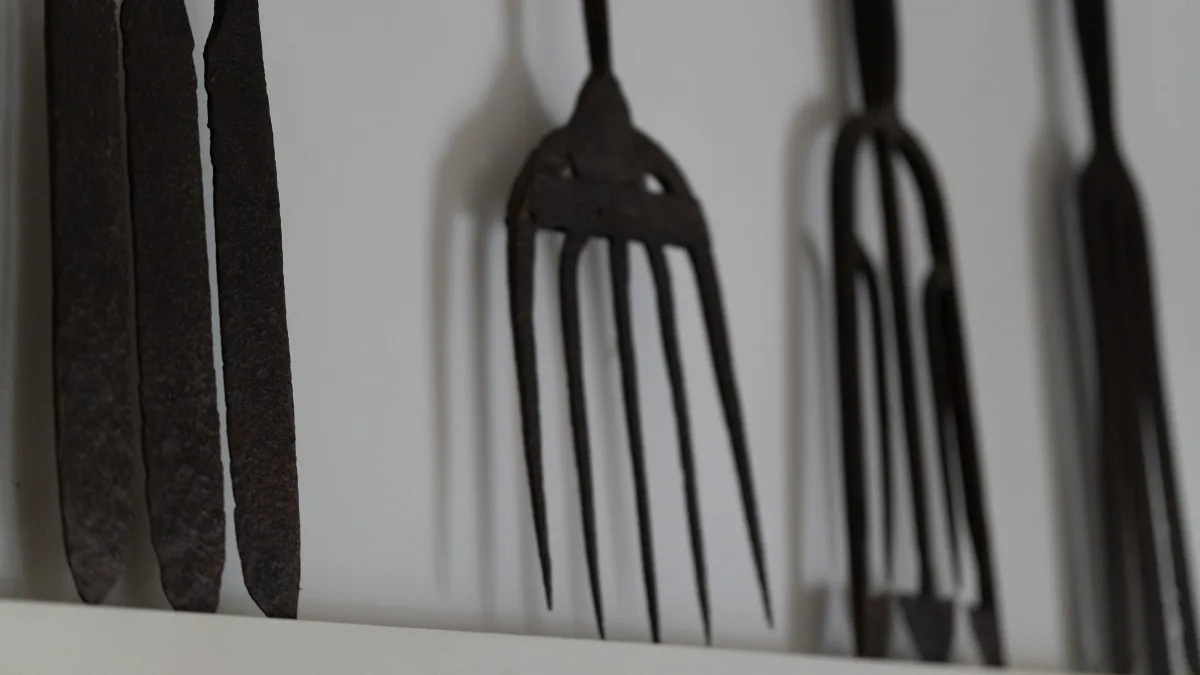
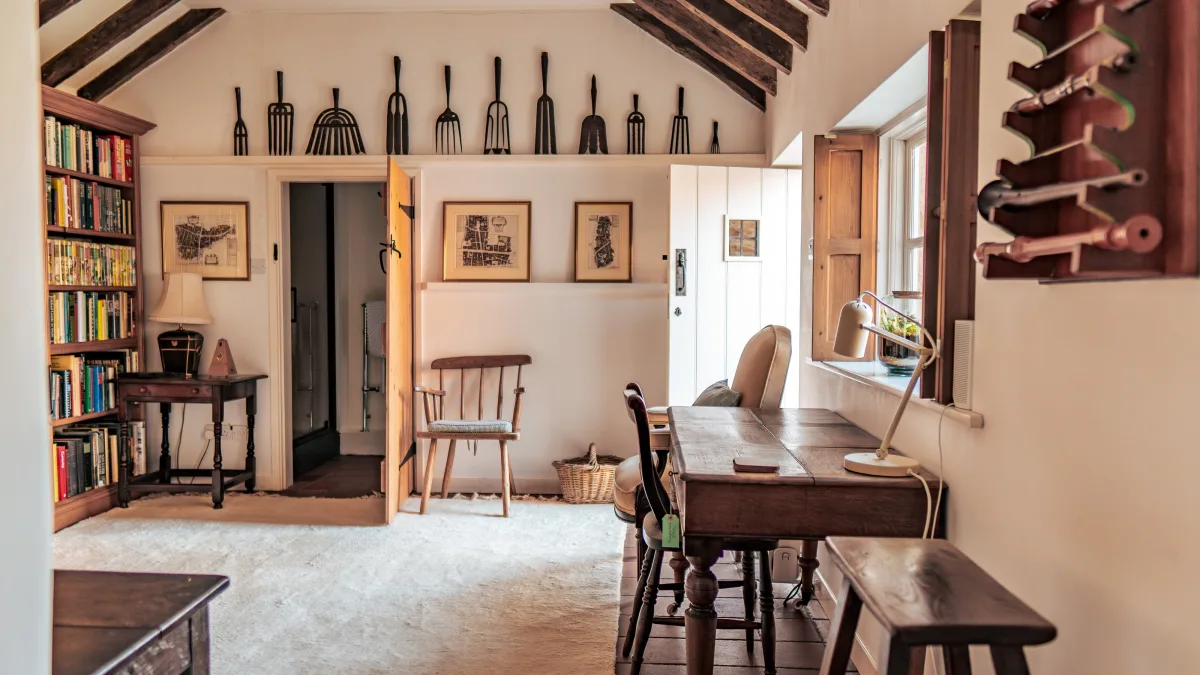
A row of old iron eel spears lines the high shelf above the doorway, each a slightly different shape, throwing long shadows up the pale wall in the afternoon light. They are the sort of thing you find in a house that has collected curiosities for centuries, and children notice them first.
Lower down, three bronze heads sit in graded sizes on a dark chest, their faces worn smooth, one of the small curiosities that reward a slow look around the room. Framed early maps of the City of London — Cheapside and the old streets around it — hang on the far wall, and there are odd bits of brass and pottery on every shelf that is not already full of books.
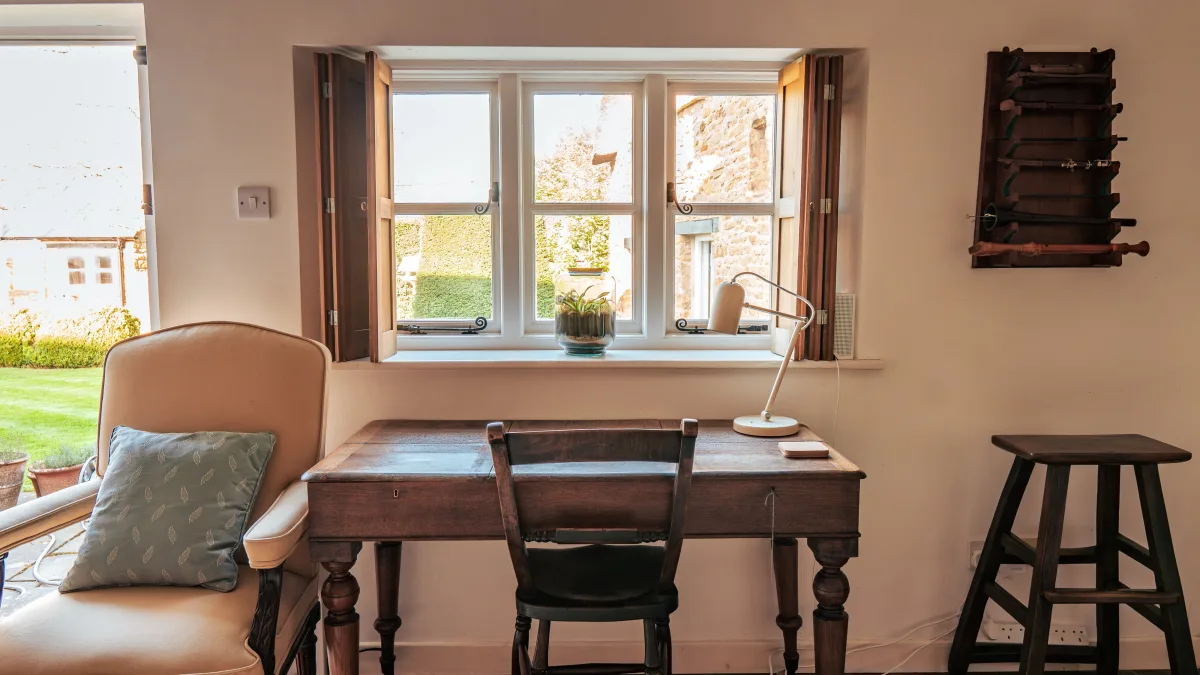
Under the window sits a fine old writing desk, its worn oak top catching the morning sun, set up as a proper workspace and looking straight out over the walled garden. A reading lamp and a glass terrarium keep company at the far end, and full-fibre Wi-Fi -- a quick 500 Mbps, the same speed up as down -- reaches every corner of the room, easily the best spot in the cottage to answer a few emails or write something longer. And when a call needs quiet, the door through from the living room can be pulled to, closing the library off as a private room of its own -- ideal for a video meeting while the rest of the house carries on.
The soft cream armchair beside the desk, with its blue cushion and framed maps behind it, is just as good for reading as for thinking. Guests drift in here to work in the morning and stay long after they meant to leave, the uncluttered desktop and the quiet making it hard to find a reason to move.
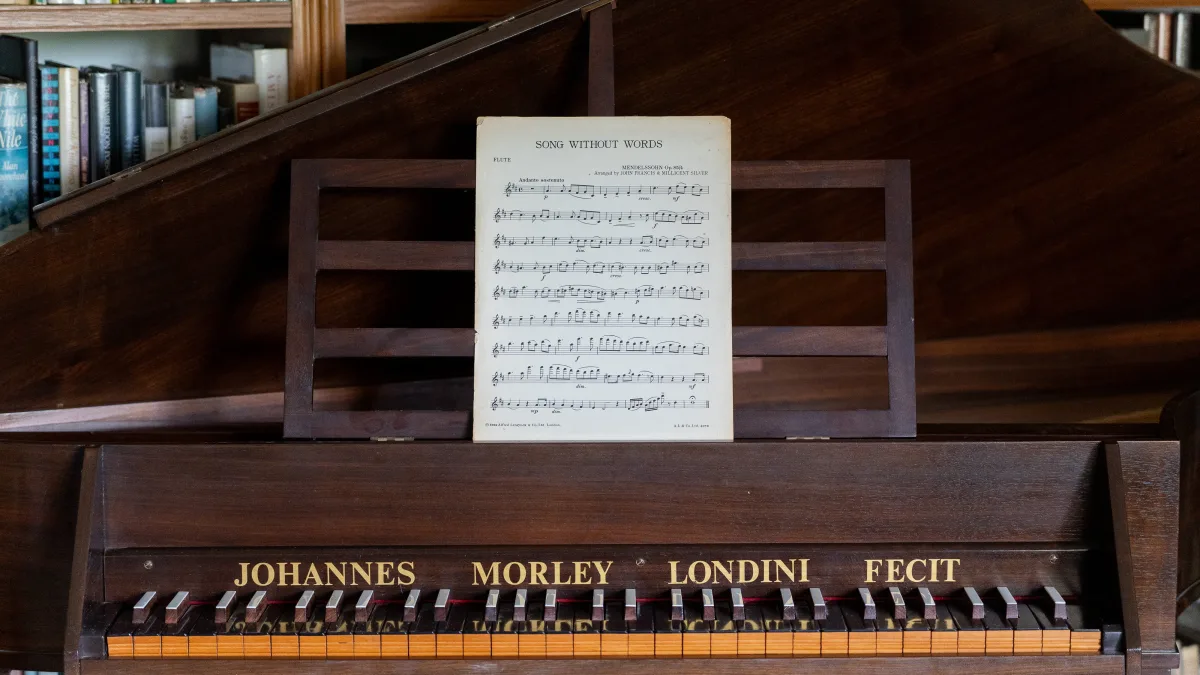
It is a musical room, too. A little Morley spinet stands among the books with sheet music for a Song Without Words left propped ready for anyone who plays. An old keyed flute and a few other odds and ends are dotted about the shelves for the curious to pick up and try.
Children gravitate to the spinet; grown-ups linger over the music left open on the stand. Nobody minds if you play badly; the thick stone walls and the plank door see to that, and the room seems to have been designed for sound as much as for reading.
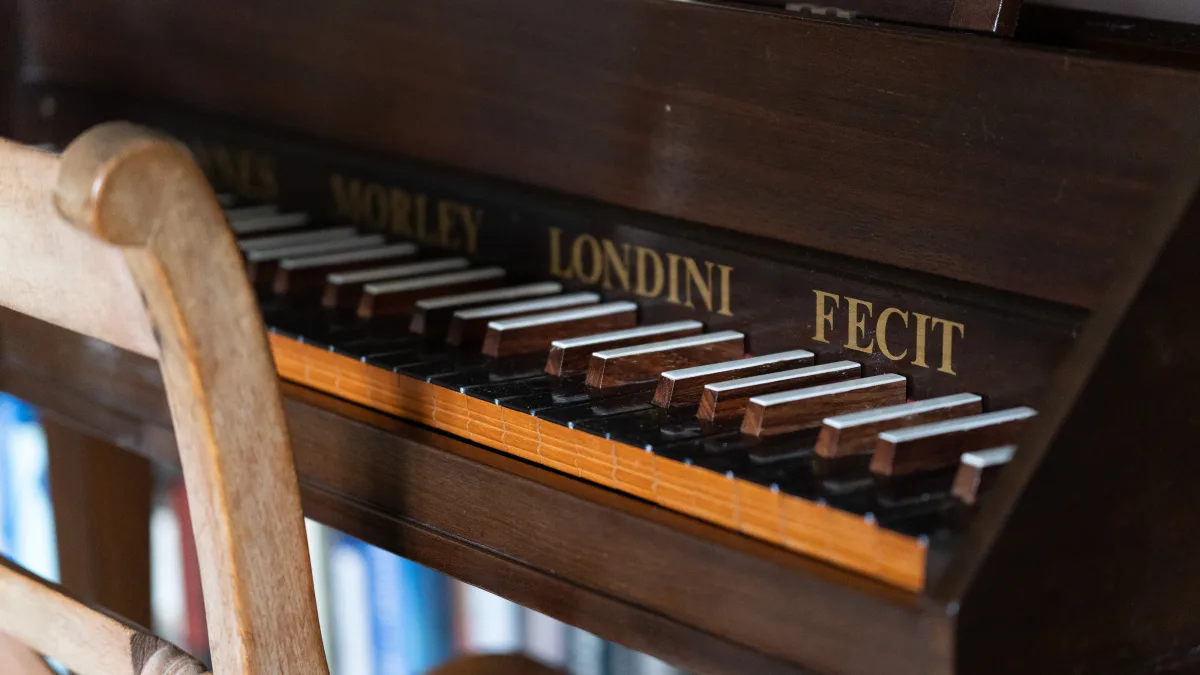
Johannes Morley Londini Fecit runs in gold lettering along the keyboard above the worn wooden keys. Morley was a London maker whose spinets found their way into country houses across England, and this one has the bright, clear tone that suits a room of this size.
A pine chair is drawn up close, ready for whoever sits down to try a few notes. The keys have the shallow travel and the slight resistance of an instrument that has been played for decades, and even a tentative hand produces something worth hearing.
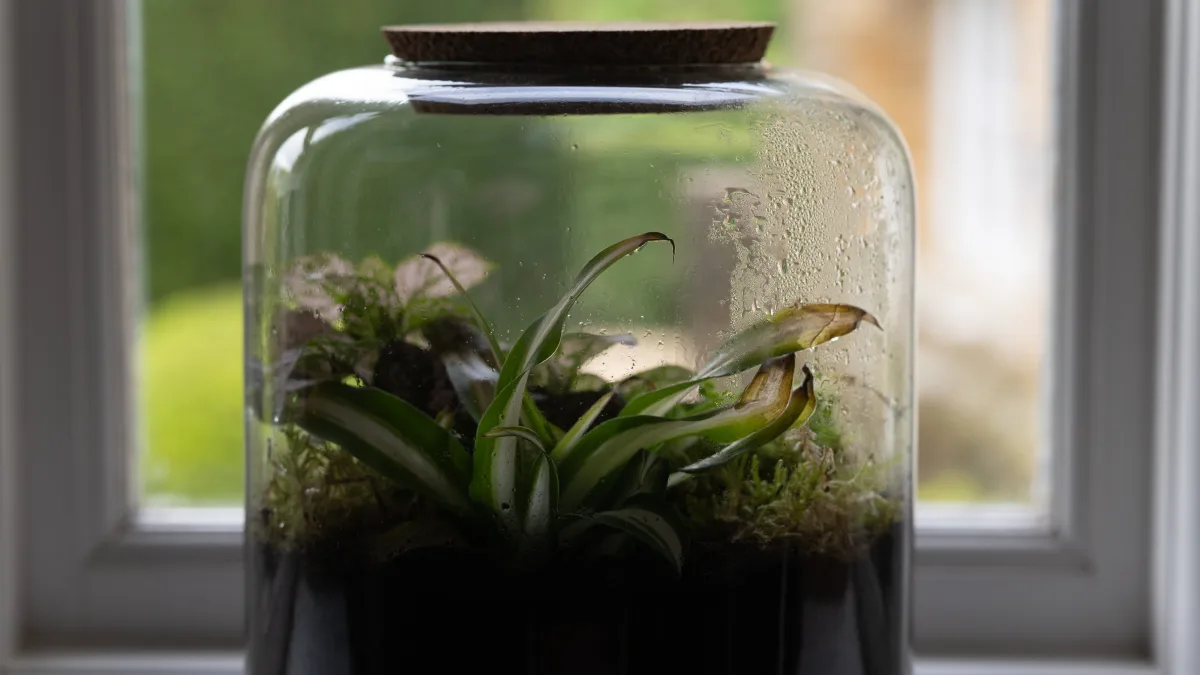
On the windowsill a great corked jar holds a small world of its own: moss, ferns and a sprawl of spider plant, breathing against the misted glass with the real garden just beyond. When the sun comes round in the afternoon the whole jar lights up green, and the boundary between inside and outside dissolves for a moment.
It is the kind of thing you find yourself watching while the kettle boils: condensation on the inside, hedge and lawn on the outside, and the morning light moving slowly across both. It has sat on this sill for years, needing almost nothing, and it sets the tone for a room that looks after itself.
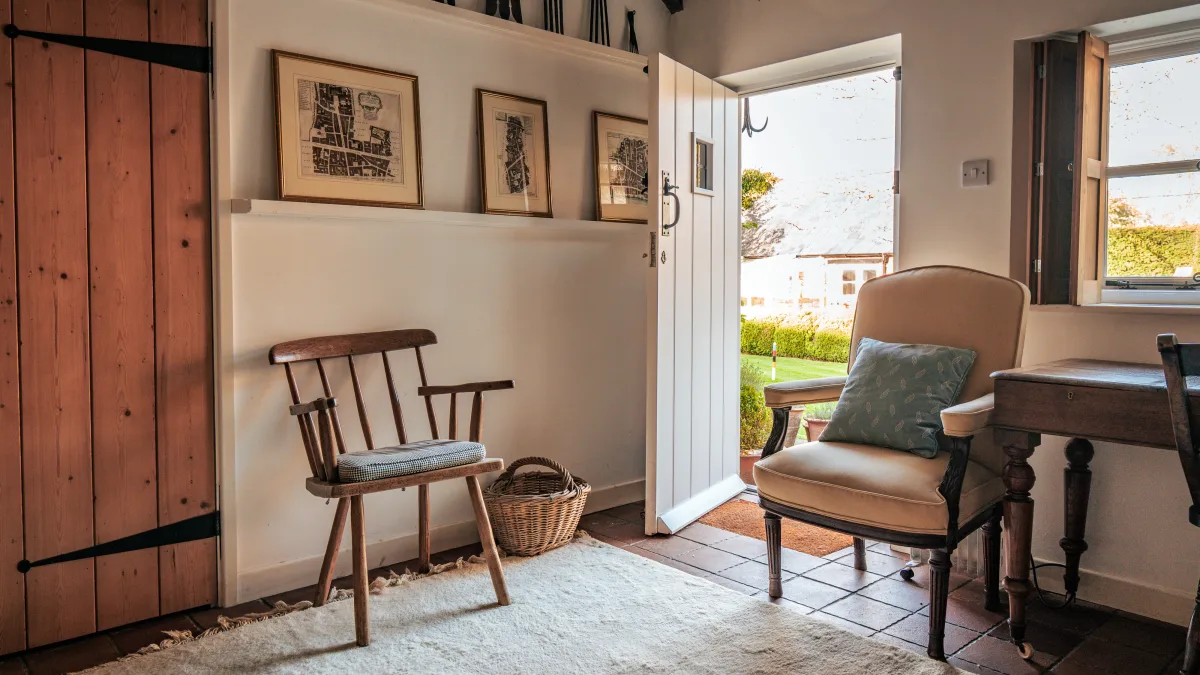
Throw the door open and the room runs straight out to the garden, with the lawn and the old stone barns framed in the doorway. Framed prints of Ledwell line the picture shelf, and a country chair waits in the corner for the overflow of a busy house.
It is the room people retreat to: close enough to the kitchen to hear the house, far enough off the hall to read in peace, with a chair for every mood and a thousand books between. Most guests find their way here on the first evening and quietly claim a spot for the week.
Four bedrooms, sleeps seven, less than a mile from Soho Farmhouse. Check dates and book on Airbnb.