The Snug
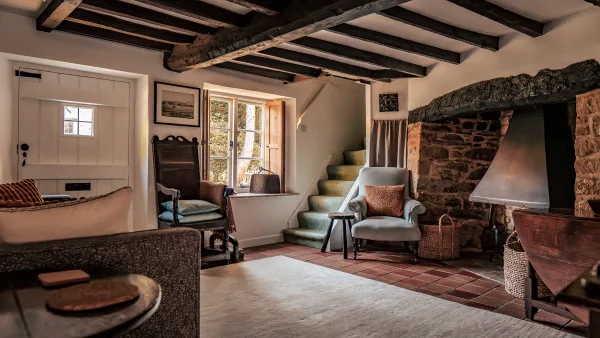
The smallest room in the house, and the one everyone ends up in: a quiet corner by the old stairs, against bare Cotswold stone.
The smallest room in the house, and the one everyone ends up in: a quiet corner by the old stairs, against bare Cotswold stone.
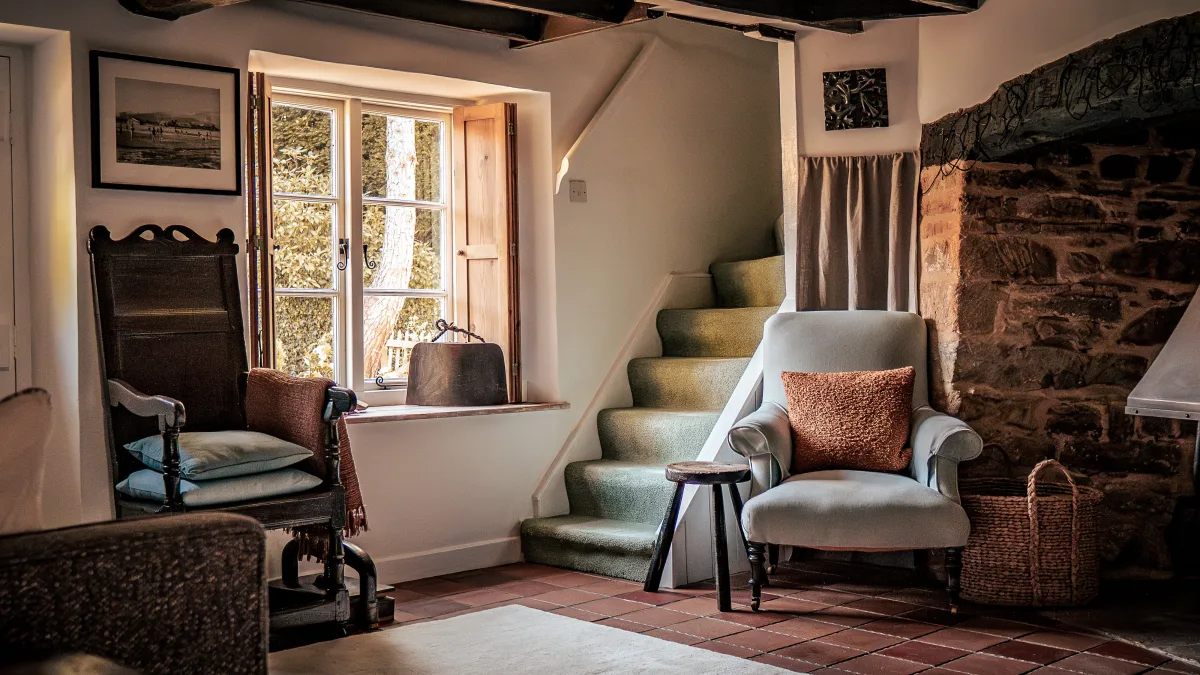
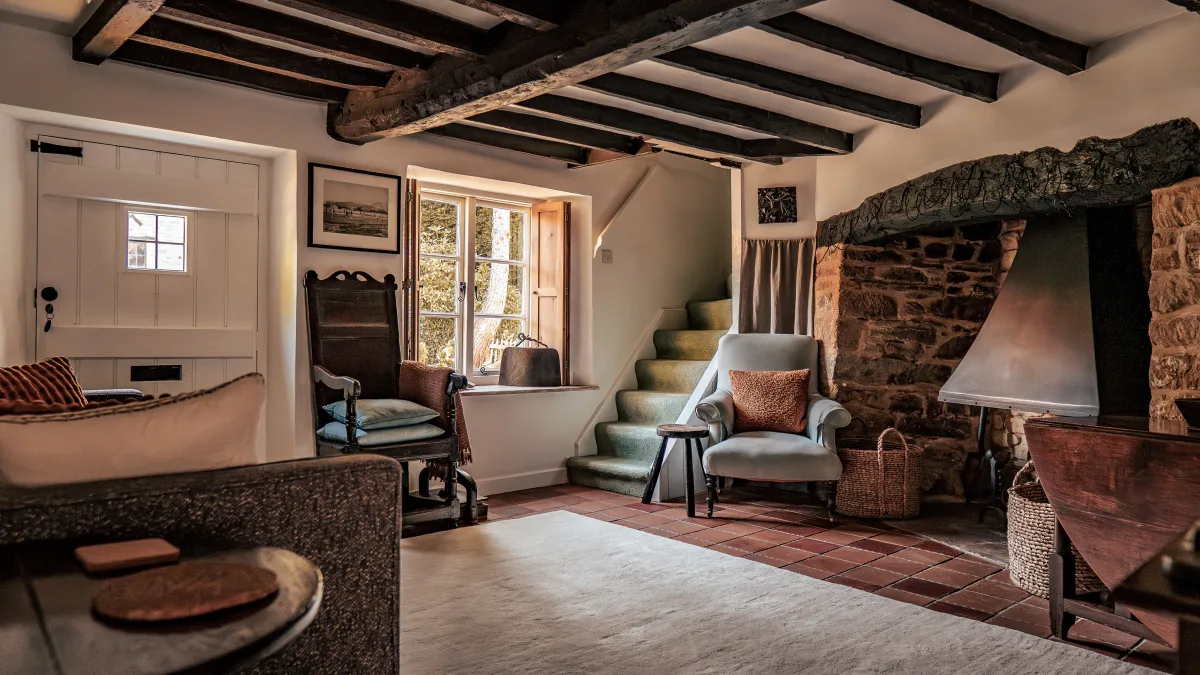
The snug sits at the foot of the old winding staircase, where the cottage feels at its most original. One whole wall is bare Cotswold stone, the rough honey-and-rust rubble that the rest of the house wears under its lime plaster. A low beam runs overhead, and you instinctively drop your voice when you come in.
It is the corner people slip away to. Someone takes a book and the good armchair here while the rest of the cottage is still busy in the kitchen; in the morning it catches the first low light through the shuttered window, the stone going warm and gold before anyone else is up.
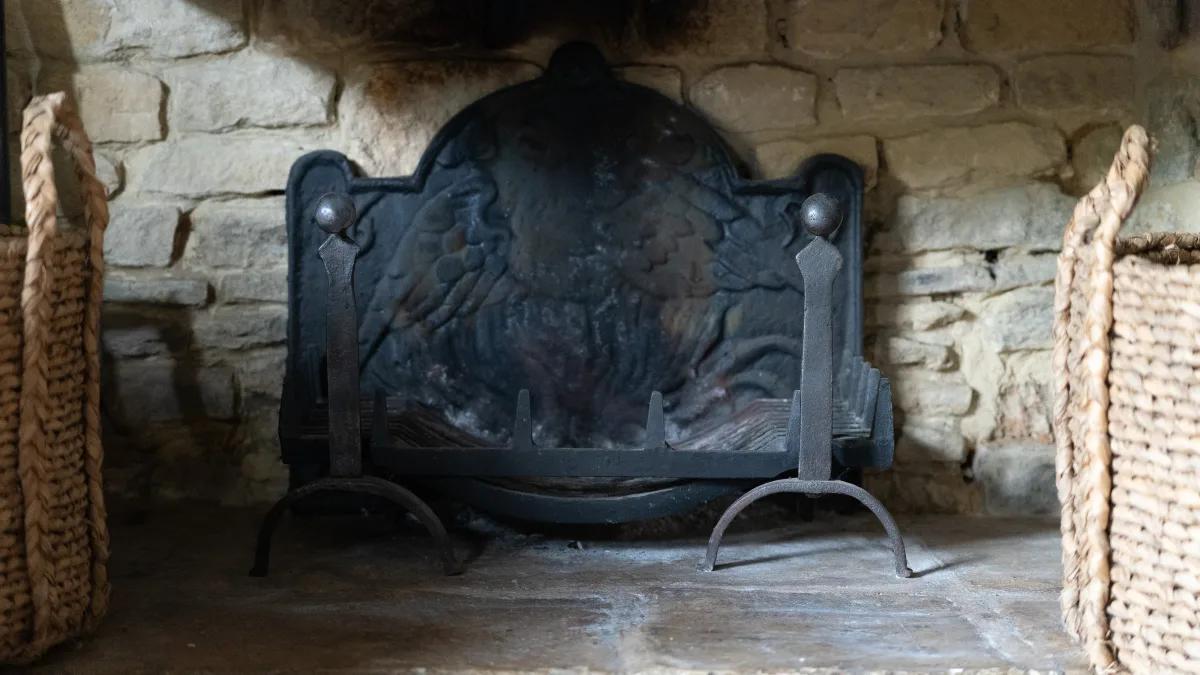
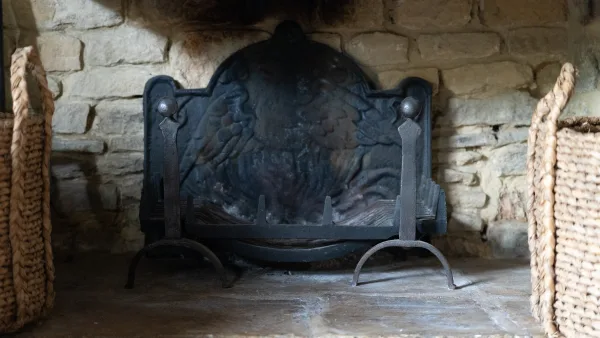
A heavy cast-iron fireback stands between its andirons in the bare stone hearth, its old relief worn soft by centuries of heat. Woven log baskets wait to either side, and the deep stone recess holds the room's warmth long after the fire has burned down.
The inglenook is the second in the cottage, smaller and more intimate than the one in the sitting room. Its timber lintel is blackened almost to charcoal, and the quarry tiles at its feet are scuffed and uneven, shaped by the same years of use.
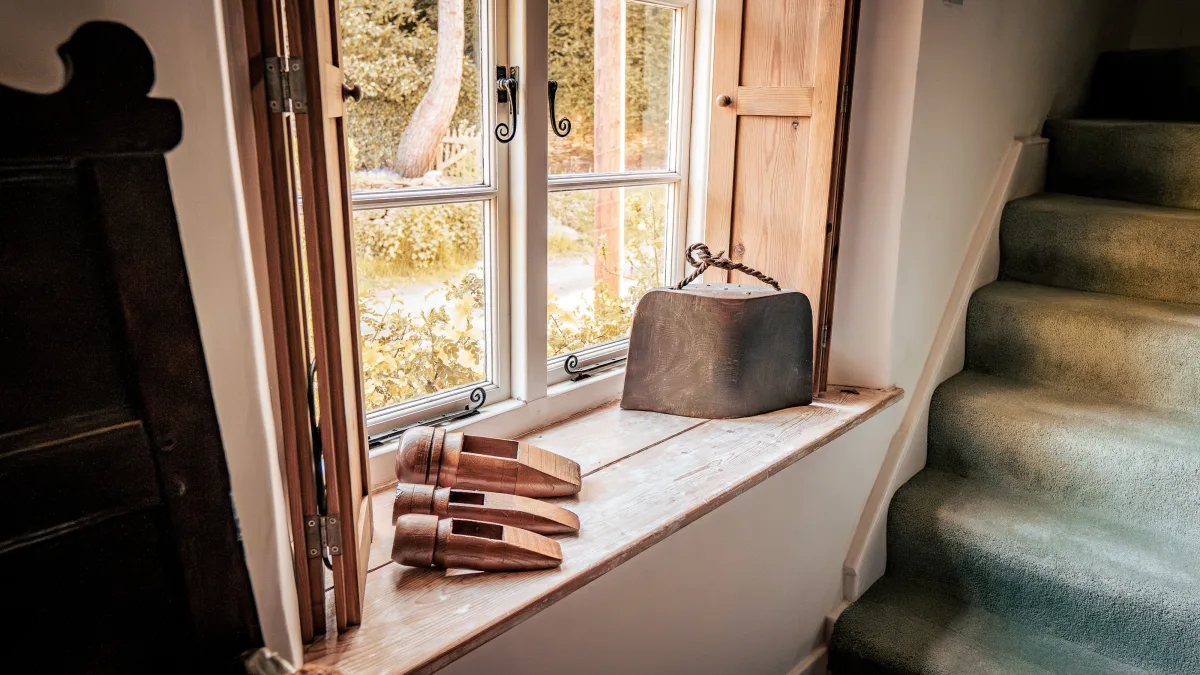
The deep windowsill holds a little row of curios collected over the years: old wooden shoe lasts worn pale by handling, a rope-handled cow bell, a few small things that have simply always been there. The pine shutters fold back flat against the stone, and the garden is bright beyond the leaded panes.
Up close the sill itself is worn smooth by hands and daylight, the objects casting long soft shadows in the morning light. It is the kind of window you lean into rather than look through, the thick cottage wall making a shelf deep enough to sit on.
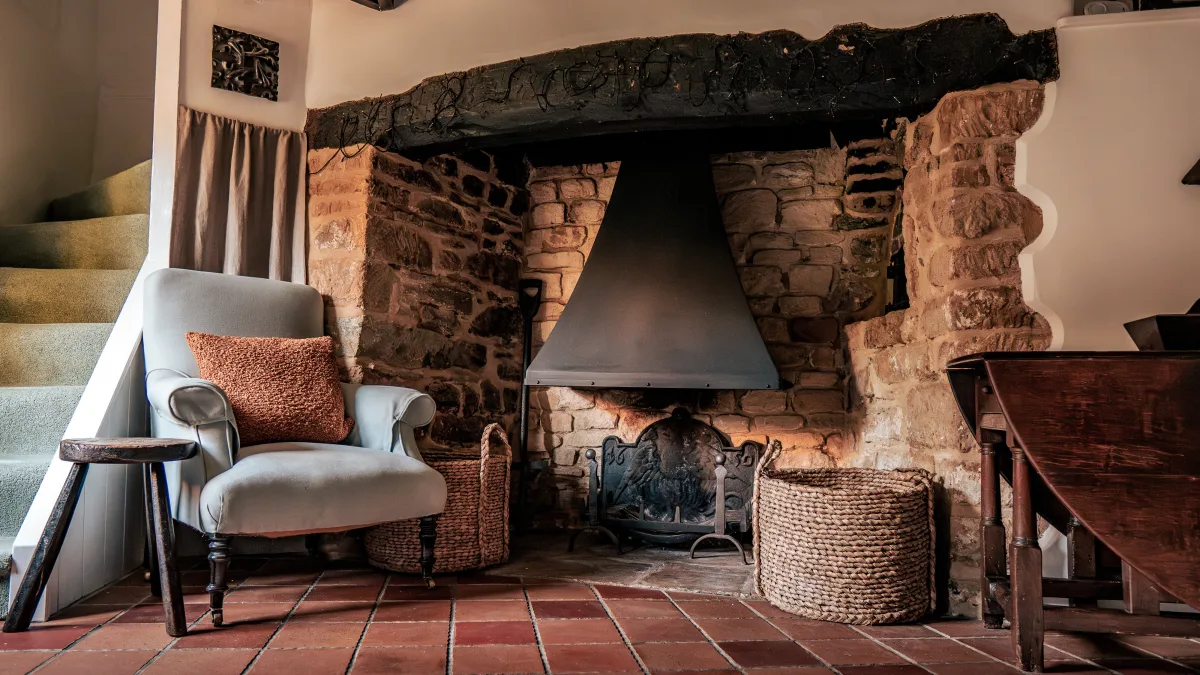
The good armchair is drawn up beside the inglenook, close enough that you feel the heat of the stone on one arm. A soft terracotta throw hangs over the chair-back for when the evening turns cool, and a burnt-orange cushion sinks into the seat, warm wool and bouclé against the dark polished wood of the arms — a spot that comes into its own on a winter evening.
It opens straight off the main sitting room, so you are never far from the fire or the conversation next door. But tuck yourself into the snug and the rest of the world goes quiet. This is the chair people fight over, politely, on the first night.
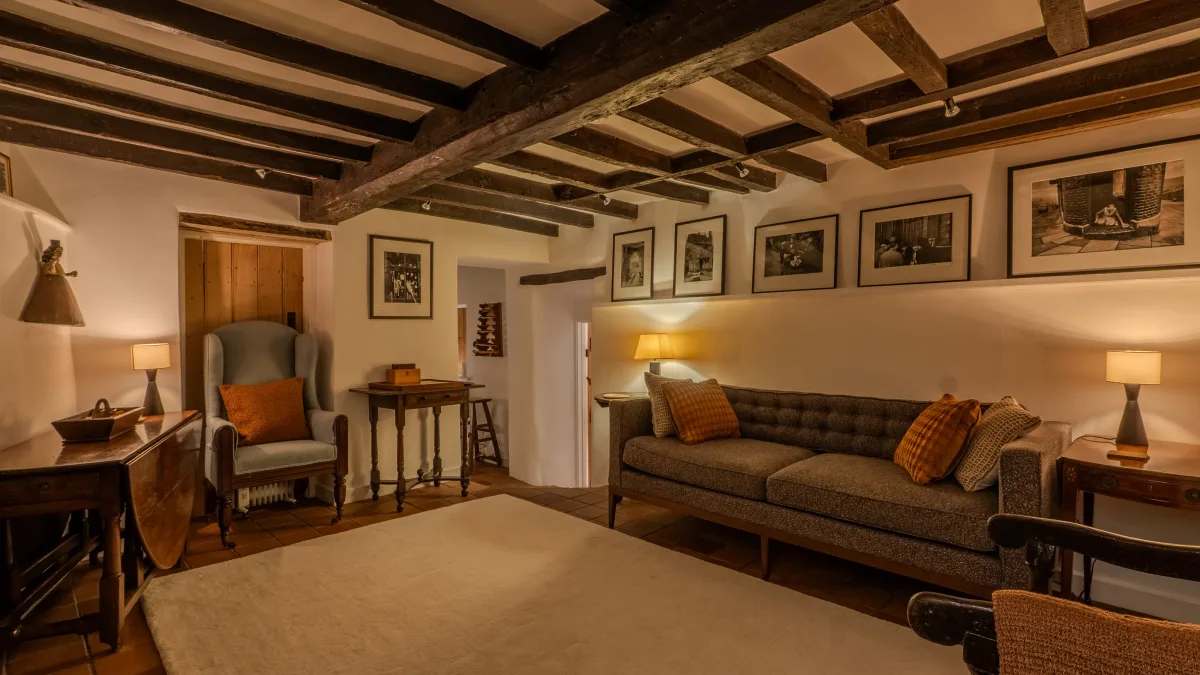
A grey tweed sofa runs along one wall beneath a row of framed black-and-white prints, with burnt-orange and cream cushions banked into the corners. Gateleg tables stand to either side, each carrying a lamp, and a pale wing chair tucks into the far alcove beside the panelled plank door.
There is room enough for the whole family to fold in together when the light goes. The prints give the wall a quiet gallery feel, and the wing chair keeps its own reading corner with a drop-leaf table at its side and the bare stone close by, the study glimpsed through the opening beyond.
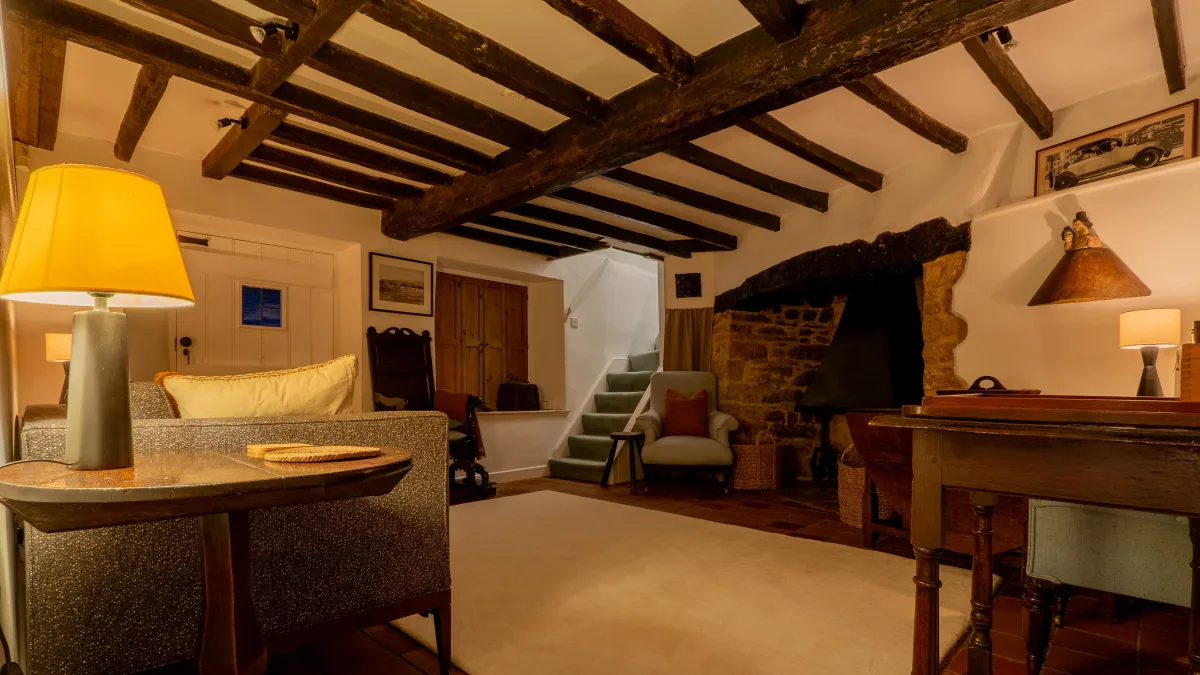
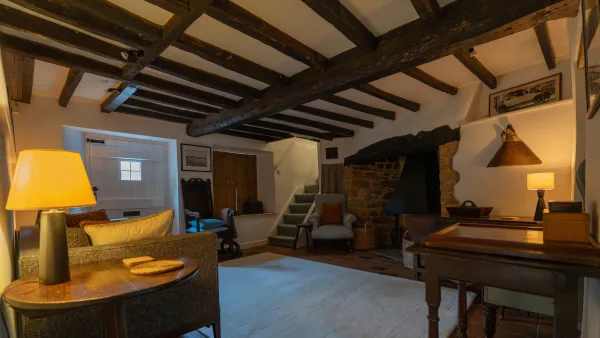
By evening the table lamps throw a warm wash across the sofa and gateleg tables, and the inglenook and the foot of the winding stair fall into soft shadow beneath the dark beams. The burnt-orange weaves and velvets glow against the old wood, and the whole little room draws in close.
It is the easiest place in the house to lose a whole evening. The lamps low, the stone going quiet, a game half-played on the side table, and the rest of the cottage somewhere far off down the hall.
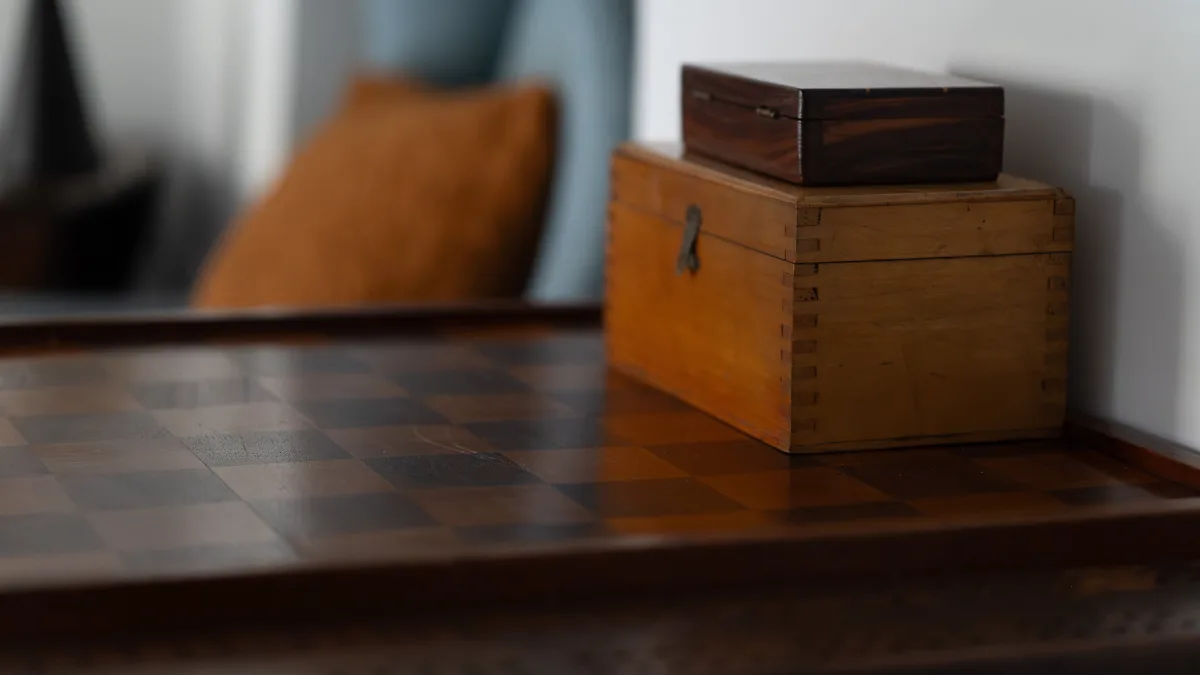
An inlaid chessboard tops the little side table, two old wooden games boxes stacked beside it. Chess, cribbage, cards, Cluedo: this is where they start, by the fire, with the lamps pooling light overhead and someone fetching drinks from the kitchen.
Step through the door and the whole snug gathers around you at once: the inglenook on one side, the deep window and the foot of the winding stair on the other, all held under low dark beams. Close enough to the rest of the cottage to hear the conversation, quiet enough to forget it entirely.
Four bedrooms, sleeps seven, less than a mile from Soho Farmhouse. Check dates and book on Airbnb.