The Kitchen
The heart of the house: an Aga that never quite goes out, an oak table built for long breakfasts, and a window full of garden.
The heart of the house: an Aga that never quite goes out, an oak table built for long breakfasts, and a window full of garden.
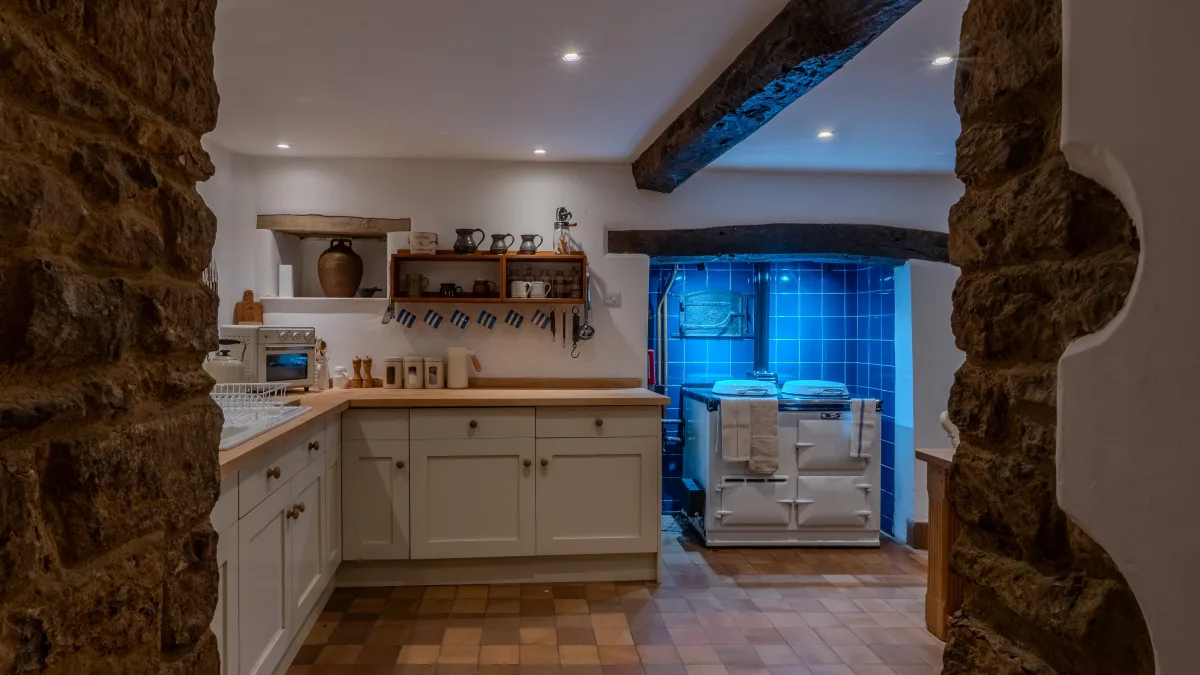
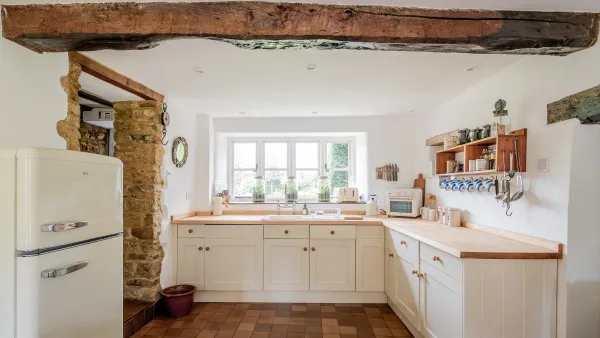
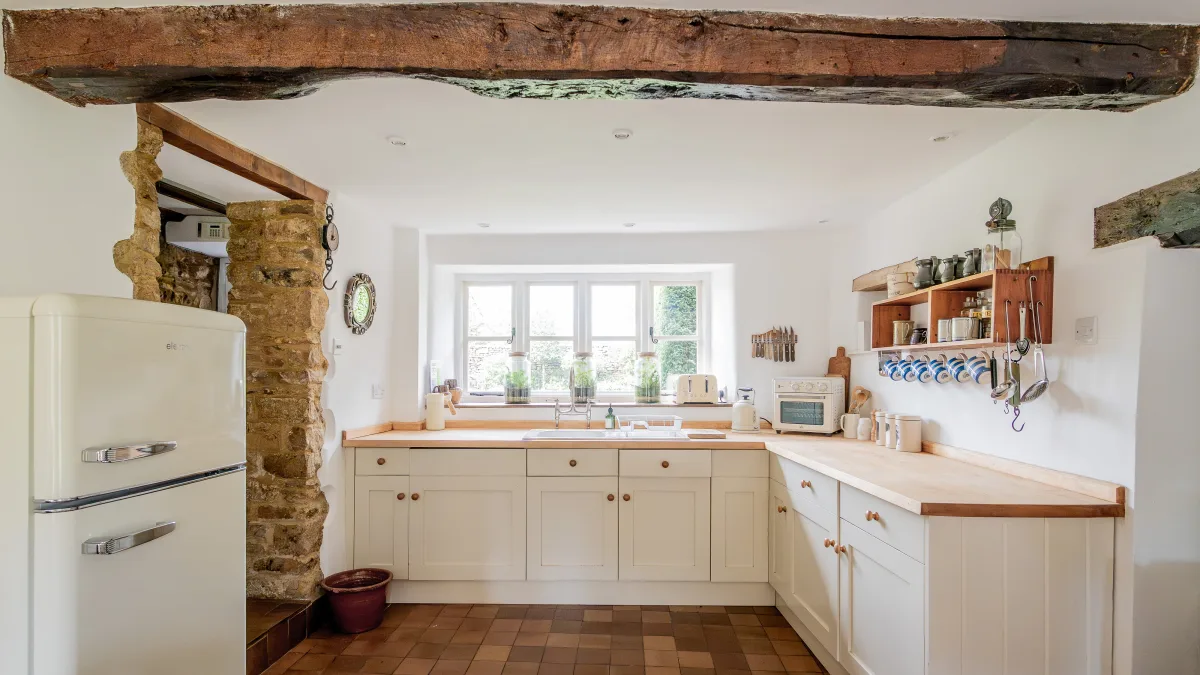
You come into the kitchen through one of the cottage's original openings, a rough natural-stone arch left exactly as it was found, lumpy and lovely under the hand. It frames the whole room like a picture: cream Shaker cabinetry wrapping two walls, maple worktops catching the morning light, open shelves of jugs and crockery, and the Aga glowing away in its blue-tiled recess at the far end.
Above it all run the original oak beams, dark and rough-hewn, and the walls are the same breathable lime plaster you find throughout the cottage. For all its period charm it is a proper working kitchen, with room to roll pastry, set down the shopping and have three people cooking at once without anyone treading on toes. The terracotta-tiled floor, worn to a soft warmth underfoot, ties it all together.
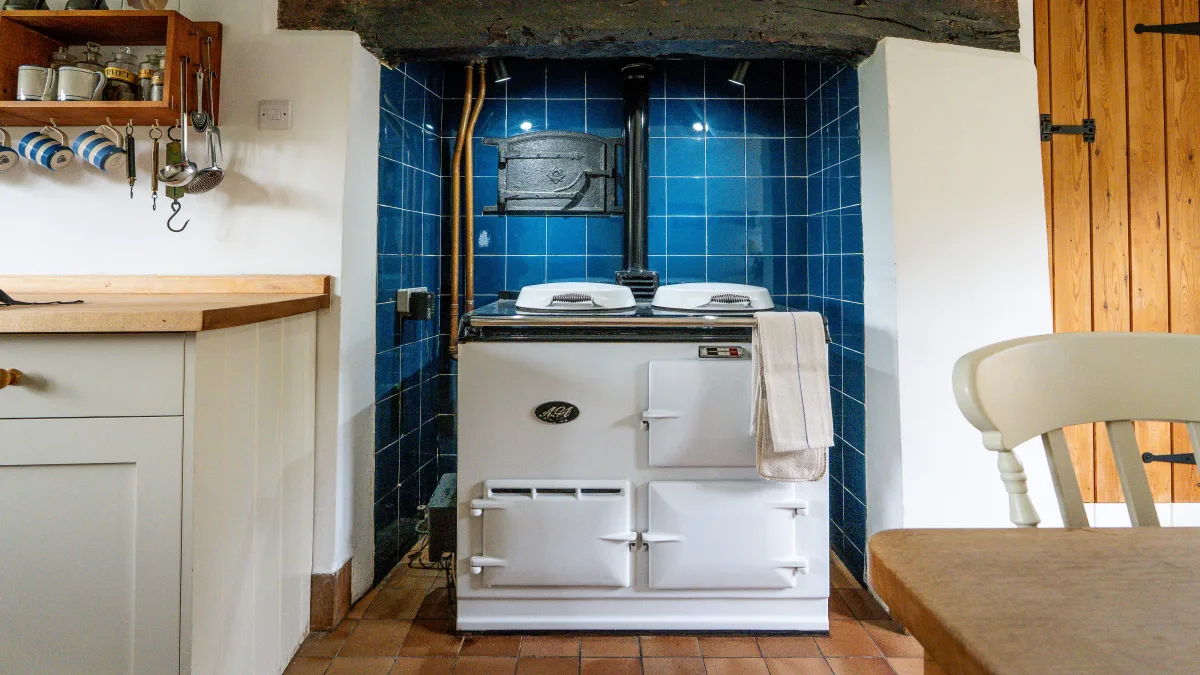
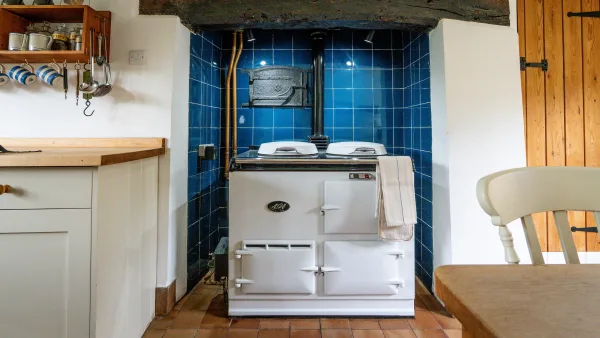
Set into a deep recess lined with deep-blue glazed tiles, the traditional Aga throws out a steady warmth that draws people in long before breakfast is made. Cold mornings, wet boots, late-night cocoa, a row of damp socks along the chrome rail: it anchors the room the way a hearth should.
Lift one of the chrome hotplate lids and there is a kettle on the boil in minutes; the ovens below tick over all day, ready for a slow roast or a tray of scones with no waiting for anything to warm up. A set of heavy cast-iron skillets and a griddle pan live on a slatted rack nearby, handles fanned out and ready to be lifted onto the heat.
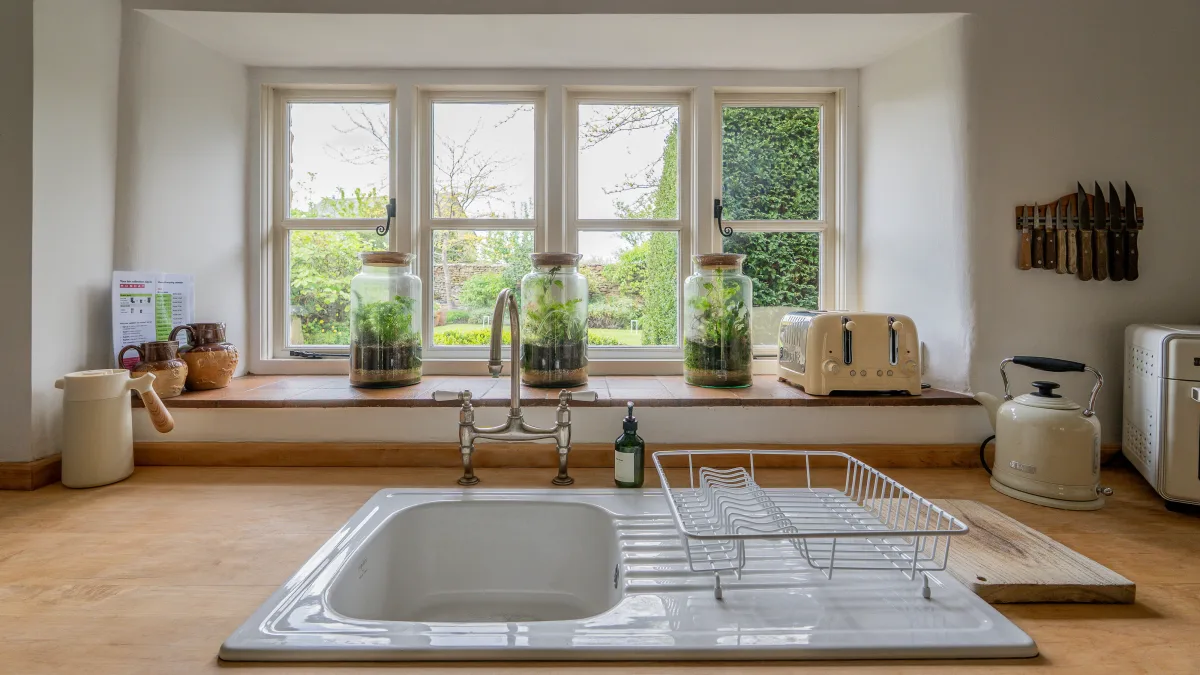
The sink sits beneath a deep four-pane window that looks straight out over the walled garden, the kind of view that makes the washing-up no chore at all, with the hedges and the trees changing through the seasons. On the broad stone sill stand three glass storage jars, and there is a bridge tap, a draining rack and plenty of daylight to potter by.
The kettle and toaster wait at the window's edge, ready for the morning. A garden door at the end of the run props open with an old flat-iron on fine days, letting the morning in across the terracotta tiles and filling the room with birdsong and the smell of cut grass.
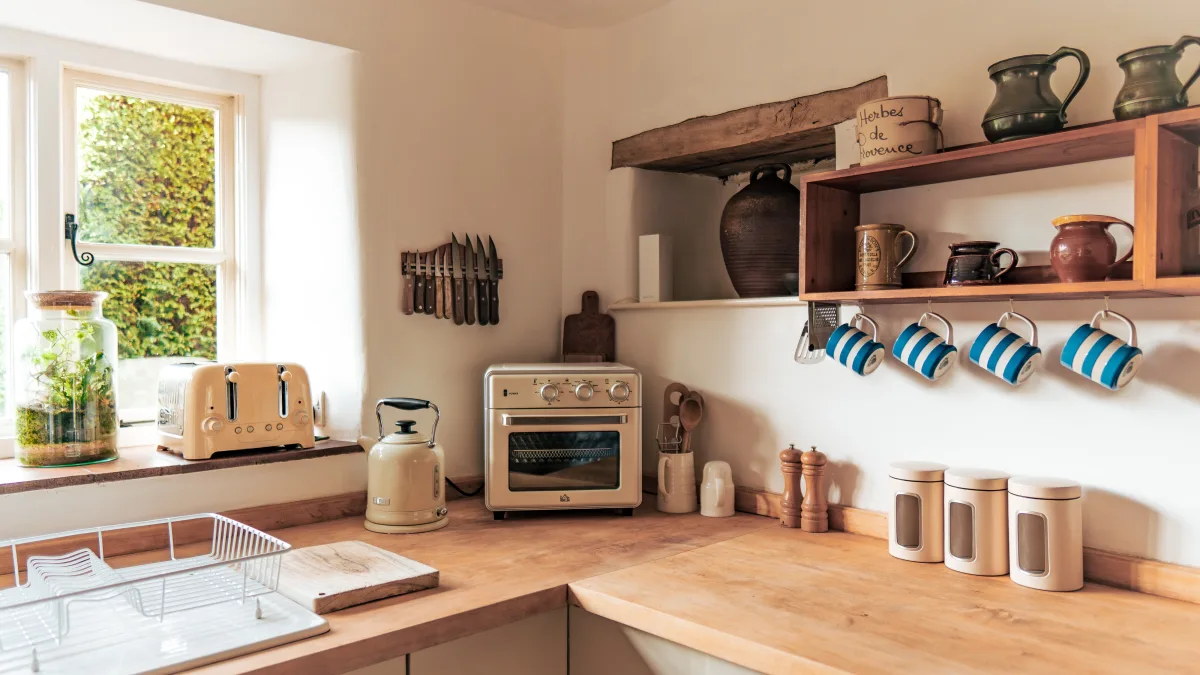
This is where the morning happens. The toaster and kettle sit by the window, the worktop oven and air fryer alongside, a magnetic rack of knives on the wall and the striped mugs waiting on their hooks. Cream canisters of tea, coffee and sugar line up at the end of the run, and the maple worktop is wide enough for two cooks to work side by side.
Below the counter, drawers and cupboards hold everything you could need: baking trays, mixing bowls, a full set of pans, serving dishes and a dishwasher tucked in at the end. The fridge-freezer stands in its own stone recess opposite, keeping the walkway clear and the cold things close to the prep.
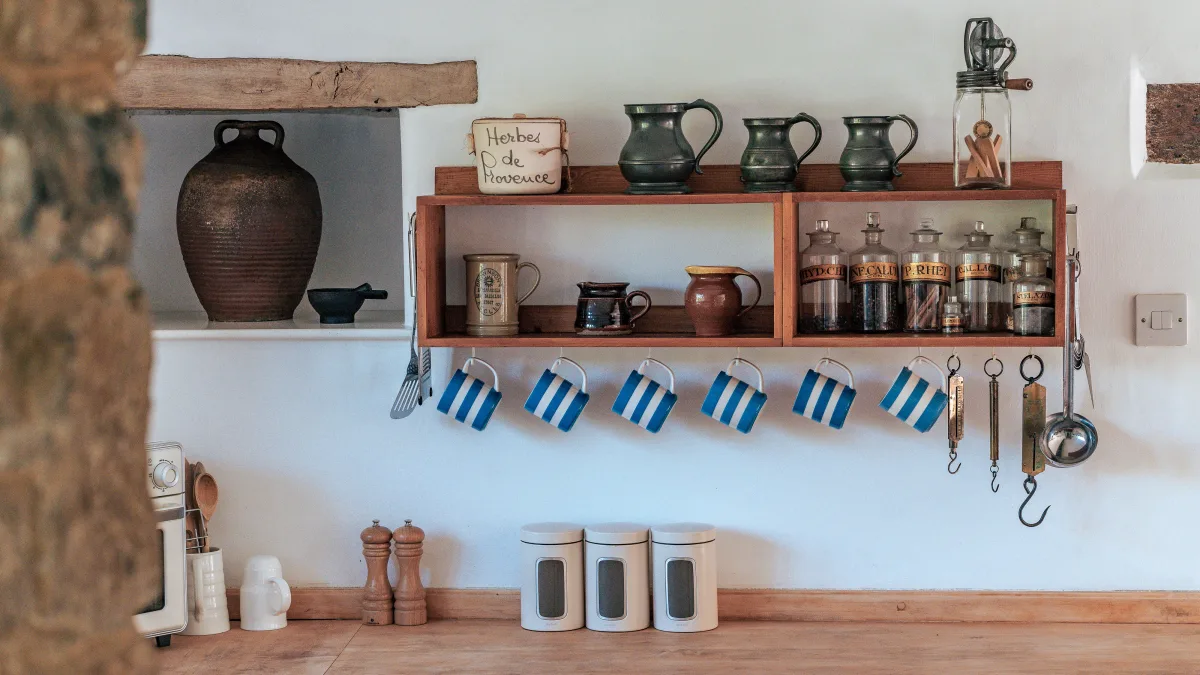
Half the pleasure of this kitchen is in the things that have gathered here over the years. An open wooden shelf carries pewter tankards in three graded sizes, a row of little labelled apothecary jars and an old stoneware flagon. In the alcove alongside sits a stoneware demijohn, and a hand-cranked grinder and a jar of utensils wait within easy reach.
Up on the high shelf above the cupboards runs a collection of antique iron cow bells, their leather straps cracked with age, the kind of detail that always earns a second look. None of it is precious, all of it is real, and it gives the room a lived-in warmth that no amount of styling could fake.
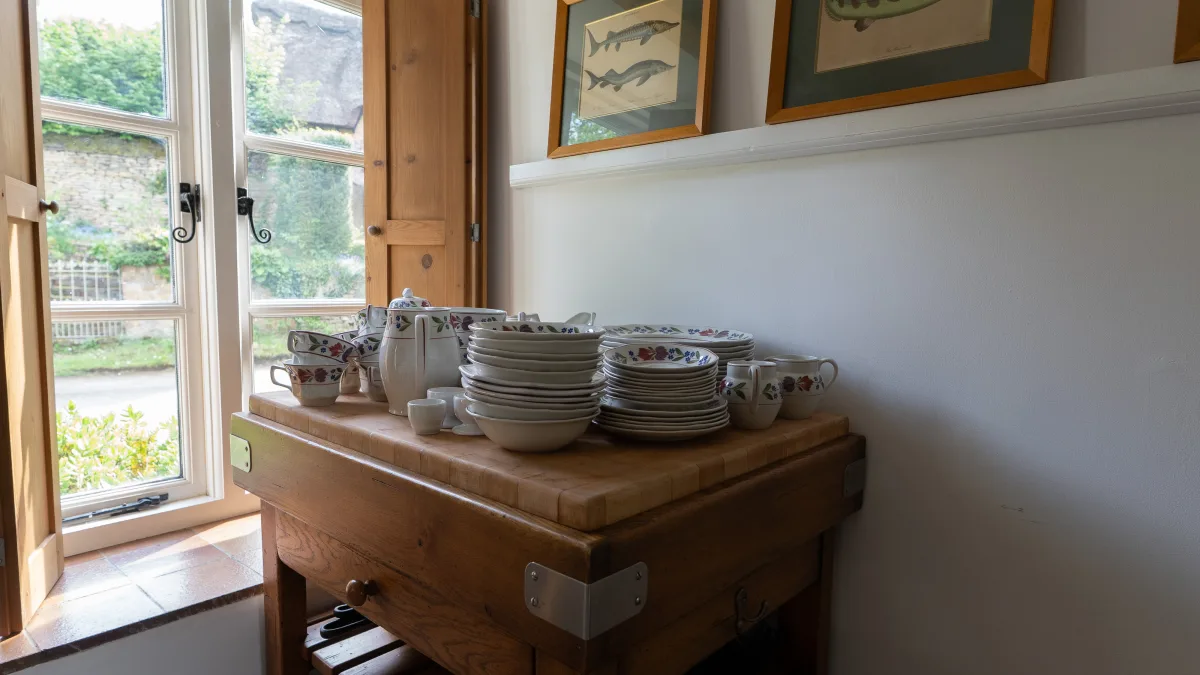
Beside the casement window a heavy butcher's-block dresser holds the cottage's vintage Old Colonial tableware: floral plates, bowls, cups and a teapot in faded reds, blues and greens, enough to lay the long table twice over. It is the kind of crockery that makes even toast and marmalade feel like an occasion.
Framed antique fish prints look down from the wall above, and the open window lets in the garden and the Cotswolds stone wall beyond. On a sunny morning, with the light coming through the glass and the plates catching colour, this corner of the kitchen could hold its own in a painting.
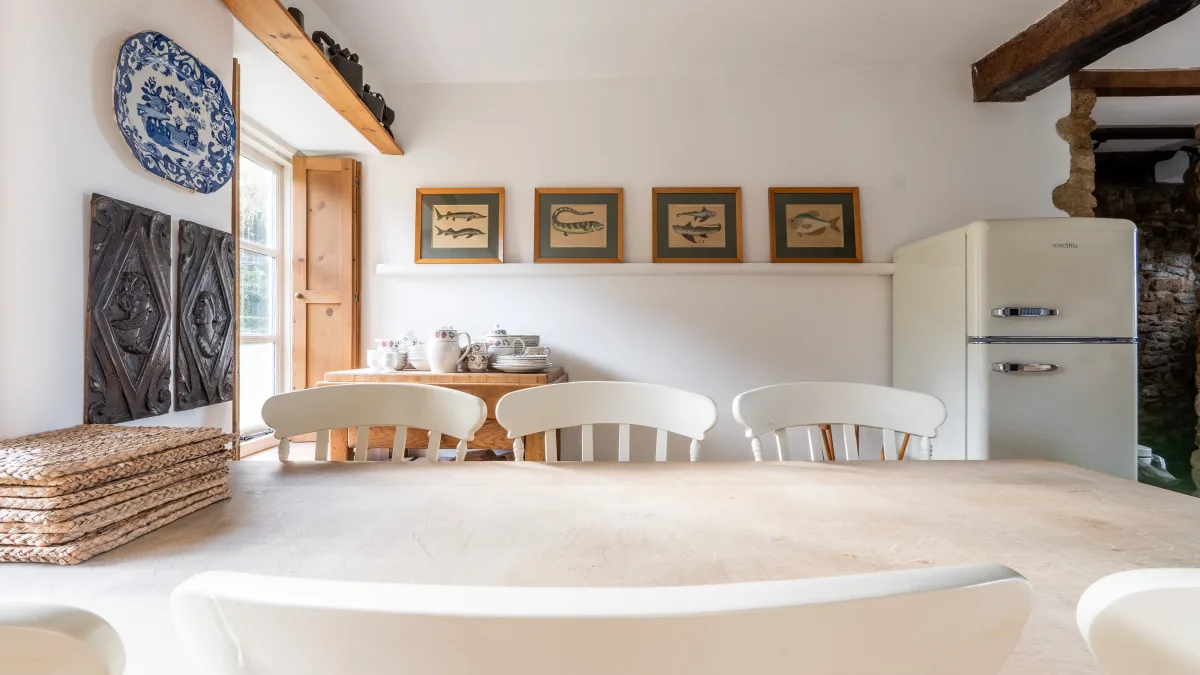
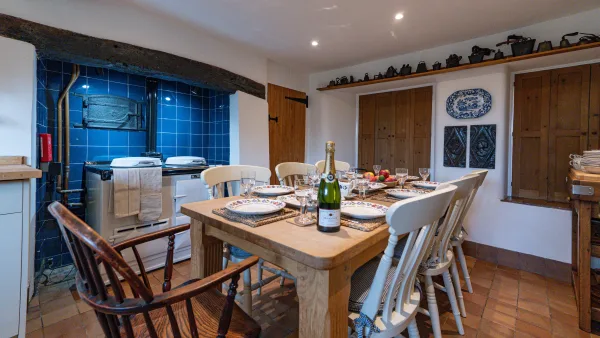
At the centre of the room stands a generous American-oak farmhouse table, bleached pale on top and warm at the grain of its chamfered edges, the kind you can seat eight around and still have room for flowers and a bottle of something. It is where the day starts and where it tends to finish: maps over coffee, board games after supper, the washing-up forgotten while the conversation runs on.
Around it the cottage's character shows: a blue-and-white Willow platter on the wall, carved oak panels, and a cream retro fridge tucked against the old stone. There is usually a jug of whatever is in flower on the table and a bowl of fruit beside it, the seasons quietly marking themselves out on the oak.
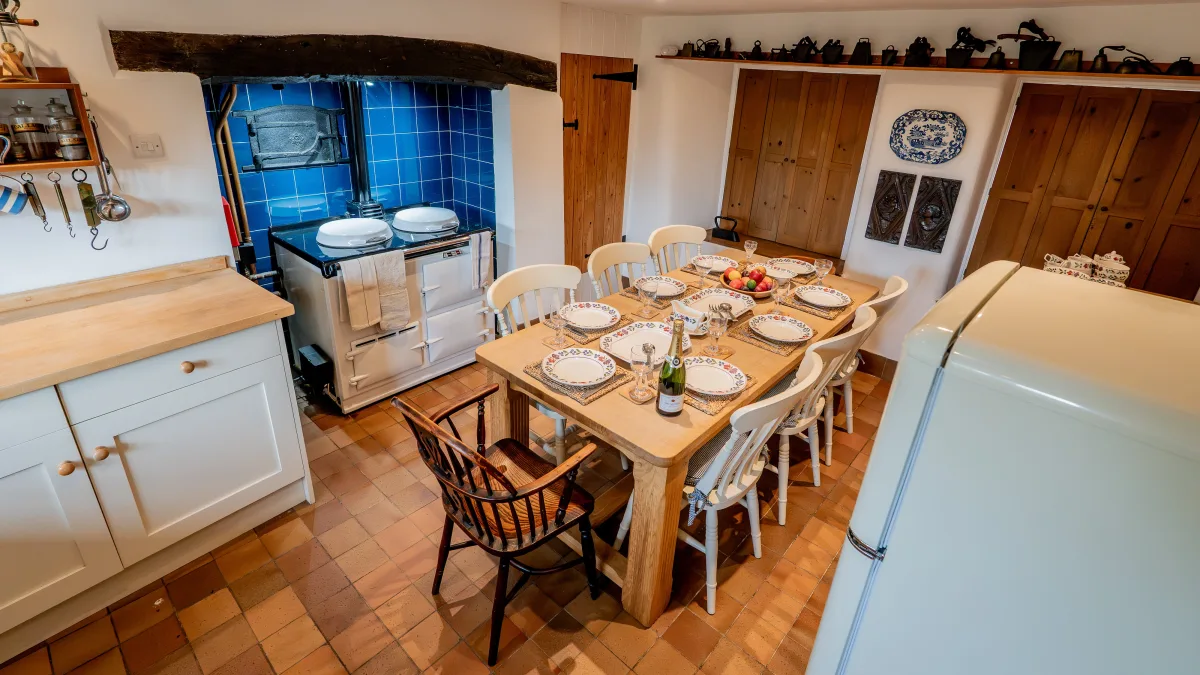
Cream chairs down each side and a dark Windsor carver at the head: the table set with the Old Colonial plates on woven mats, cut glasses on cork coasters and a bottle of fizz, the fruit bowl holding the centre. Place after place runs off down the oak, the whole kitchen opening out behind.
It seats the full house comfortably, with the Aga warm at one end, the dresser and fridge keeping the far wall, and enough elbow room that nobody has to pass the bread over anyone's head. This is the room people talk about when they get home.
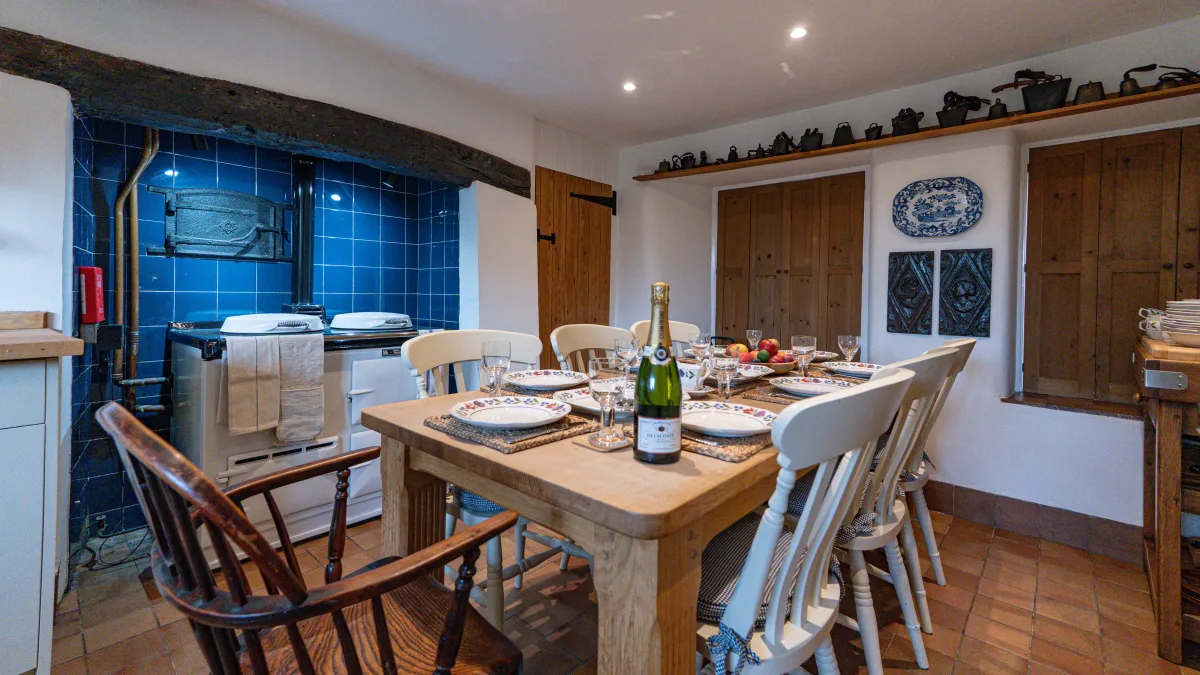
In the evening the whole room draws in around the table. The downlights warm the worktops, the Aga glows in its blue recess, and the row of old cow bells keeps watch from the high shelf. Chairs get pulled closer, a second bottle gets opened, and nobody is in any hurry to move.
It is the heart of the house, and it shows. The stone arch frames it all from the hallway, the terracotta tiles hold the warmth, and by the time the last glass is washed and the lamps are turned low, the kitchen has done what it has always done: brought everyone together and kept them there.
Four bedrooms, sleeps seven, less than a mile from Soho Farmhouse. Check dates and book on Airbnb.