The Garden
A walled Cotswold garden built for long, slow days: croquet on the lawn, dinner under the stars, and the hills rolling away past the wall.
A walled Cotswold garden built for long, slow days: croquet on the lawn, dinner under the stars, and the hills rolling away past the wall.
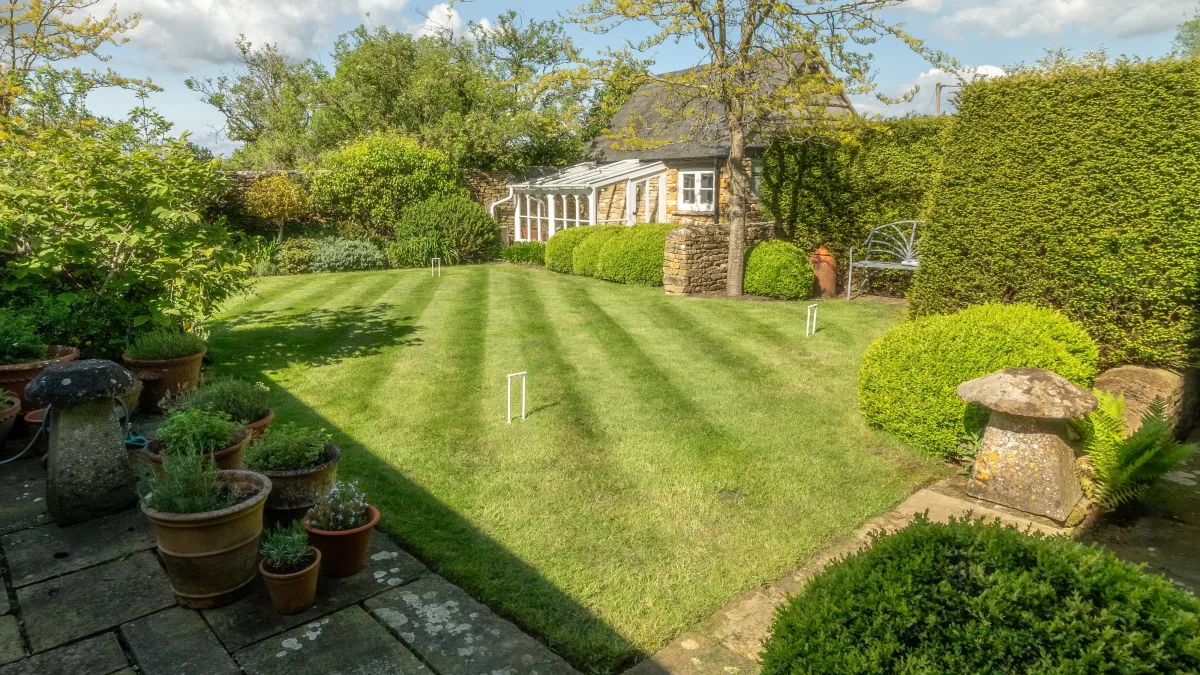
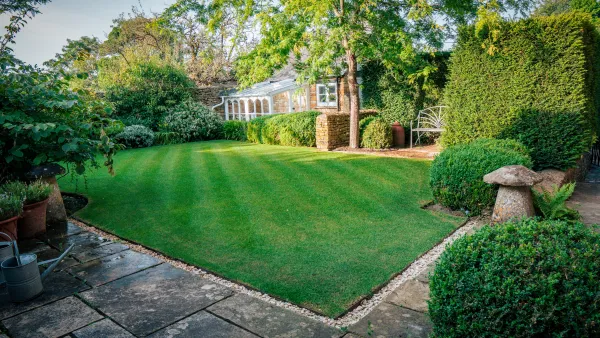
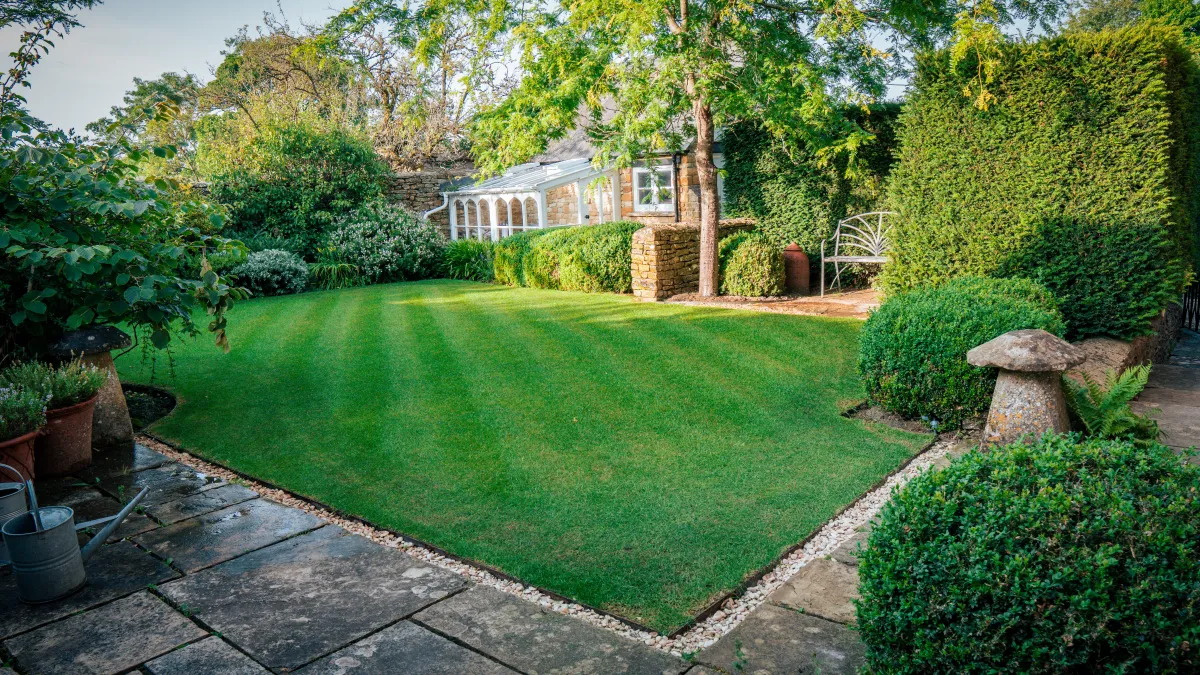
Step out of the kitchen and the garden opens up in front of you, a sweep of mown, striped lawn held inside old dry-stone walls the colour of clotted honey. Terracotta pots of lavender line the edge of the patio, a staddle stone marks where the grass begins, and the conservatory catches the light at the far end. It is properly private out here.
The walls do the work of shutting out the world, so the only sounds are birdsong, the click of a croquet mallet and, if you have left the back door open, the Aga ticking away inside. The lawn is wide enough for a proper game, long enough to wander, and mown in stripes that make the whole garden look like a painting of itself.
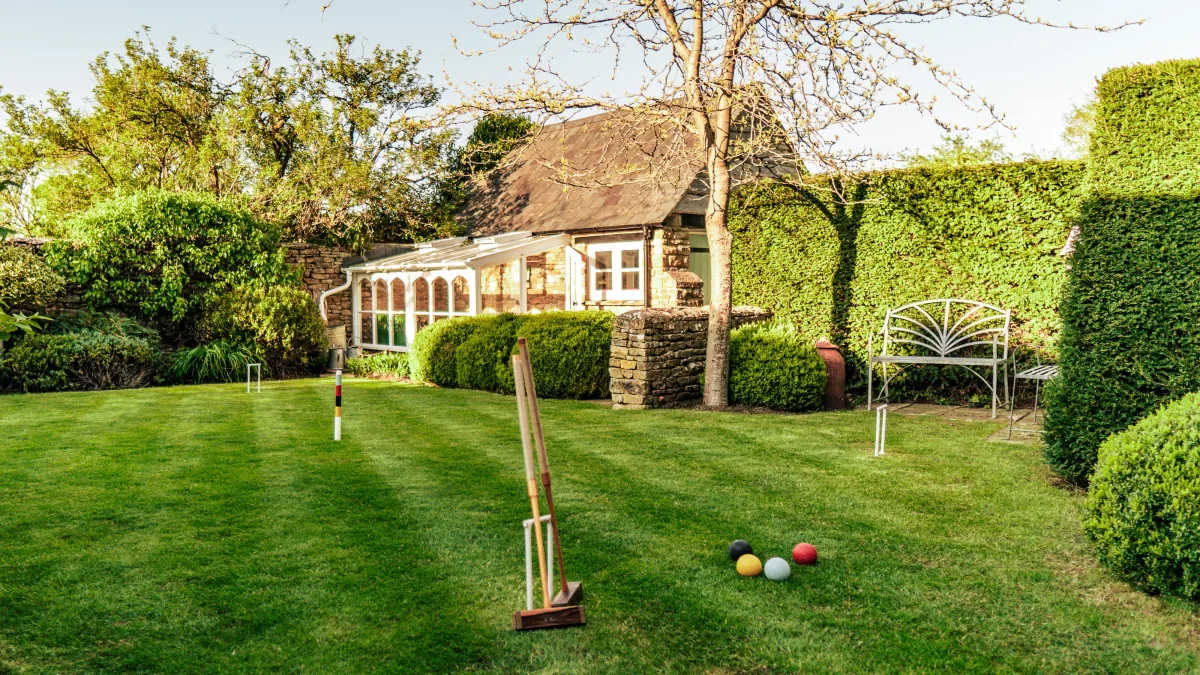
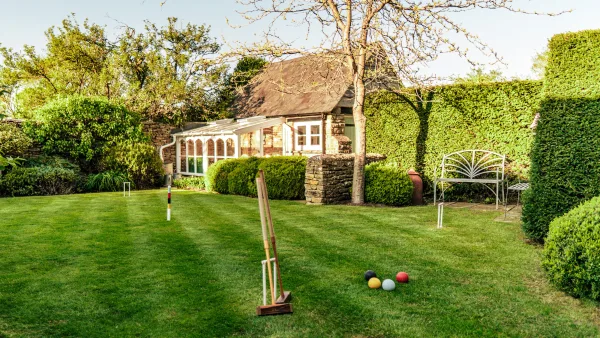
A proper Jaques of London croquet set lives in the greenhouse, ready to be carried out and laid across the lawn whenever the mood takes you. Set the hoops, hand out the mallets and the coloured balls, and an afternoon disappears happily into the rules, or the cheerful absence of them.
The grass is mown and striped for exactly this. Four balls, black, green, red and yellow, rest in the grass by a hoop as the conservatory glows in the evening light beyond. It is the kind of garden game that starts gently and ends with accusations, laughter and a second round nobody intended to play.
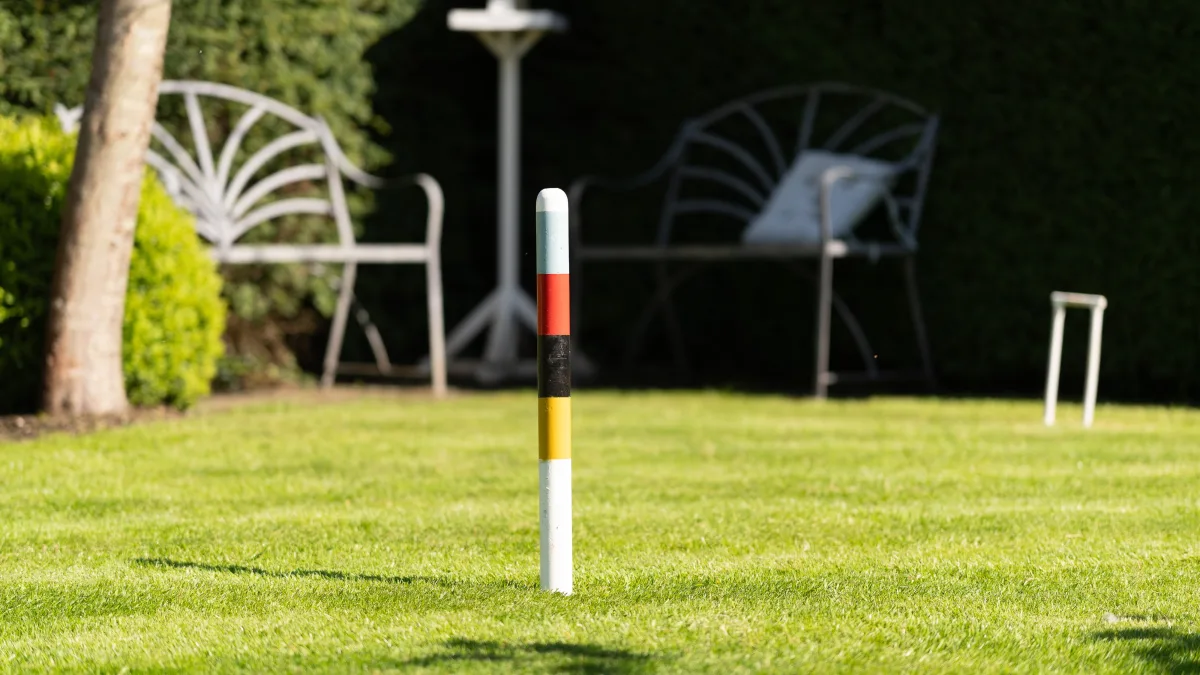
At the centre of the lawn stands the croquet winning post, its candy-striped bands bright against the mown green. It marks the end of a game that tends to begin politely and finish rather less so. It is the right kind of silly: competitive enough to matter, casual enough that bare feet and a glass of something are perfectly acceptable form.
Two white metal chairs sit waiting in the shade of the hedge behind, the perfect spot to watch and offer unsolicited advice. The whole corner of the garden is a quiet trap: you come over to line up one shot and find yourself still there an hour later.
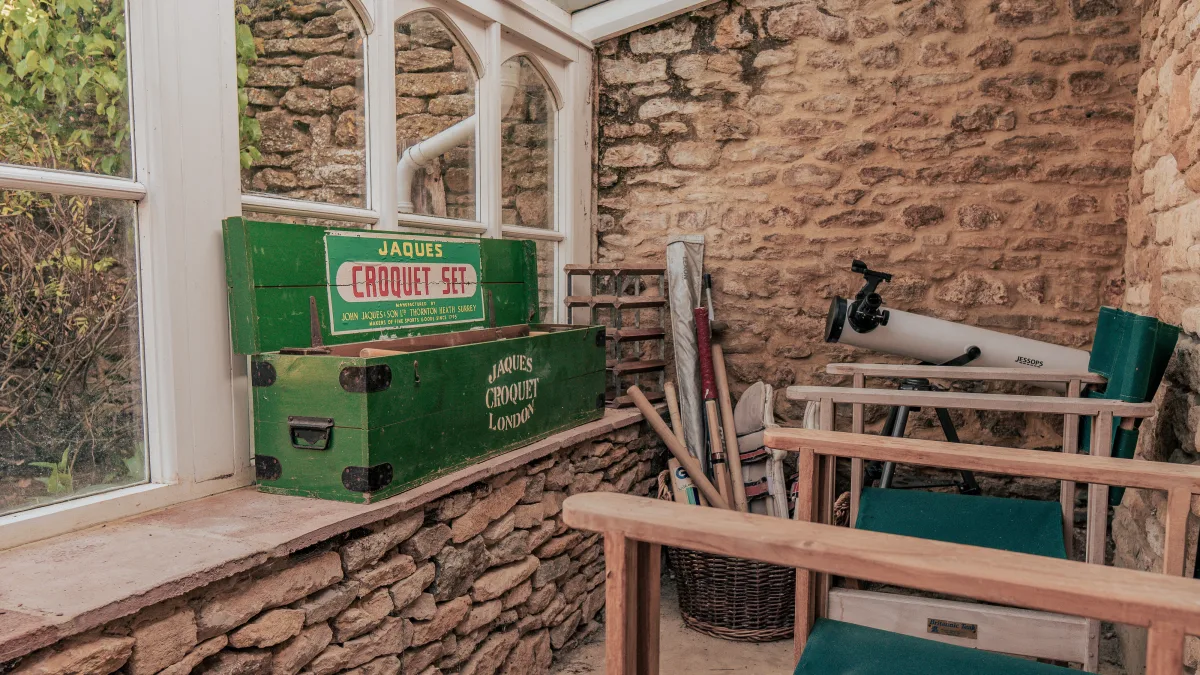
The stone greenhouse at the end of the garden is part store, part den. The vintage green Jaques croquet boxes sit stacked by the window, the mallets fanned out alongside, and a set of folded deckchairs lean against the wall, ready for whoever claims them first on a warm afternoon.
A telescope waits on a shelf for clear nights, when the village is dark enough to see the Milky Way straight overhead. On a rainy afternoon, the greenhouse itself is a good place to sit, with the door propped open and the sound of rain on the glass overhead.
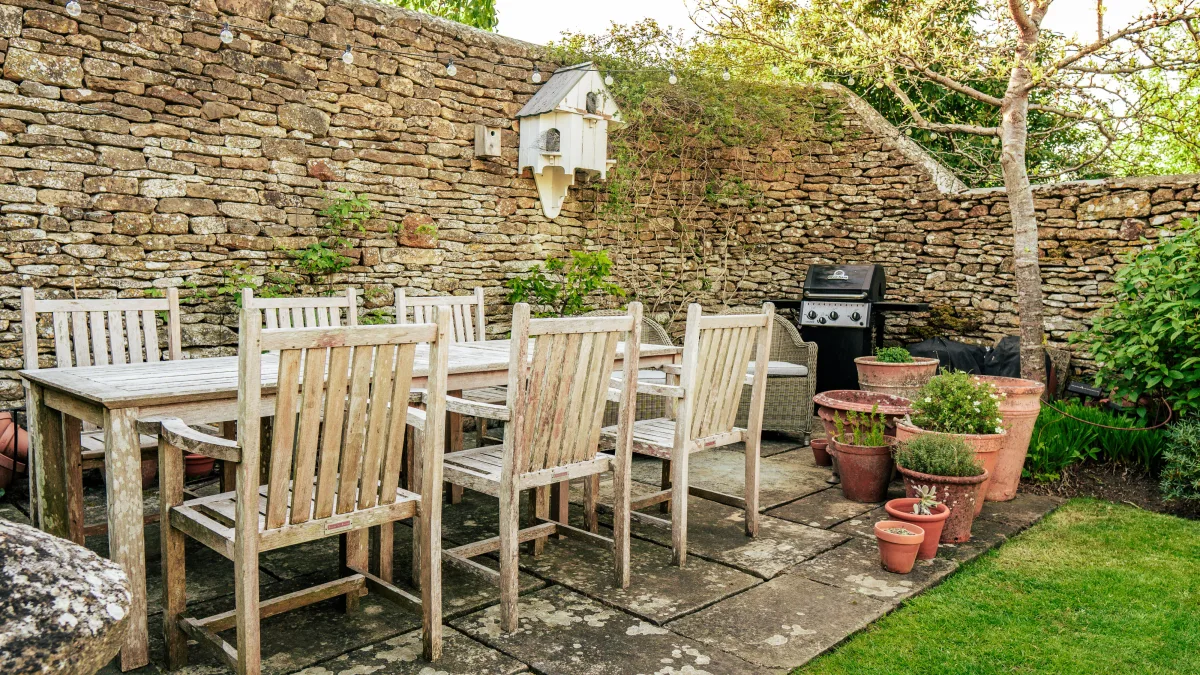
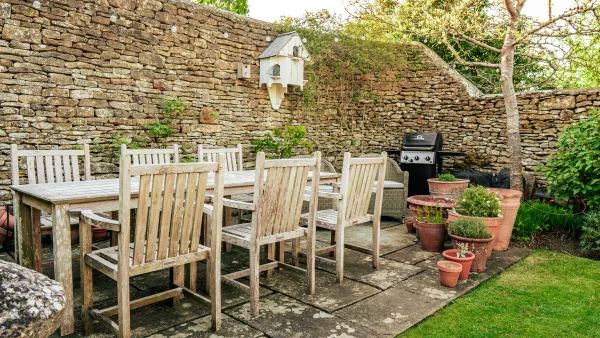
Evenings are what the garden does best. Fire up the gas BBQ by the wall, gather everyone around the long weathered teak table, and let supper run on into the dusk. The table seats the whole house with room to spare, and pots of herbs within arm's reach mean a sprig of something is never far from the grill.
A little white birdhouse keeps watch from the wall above, and as the sun drops behind the rooftops, the honey stone holds its warmth and the garden goes quiet. It is the kind of evening that starts with a plan and ends with everyone still sitting there in the dark, talking.
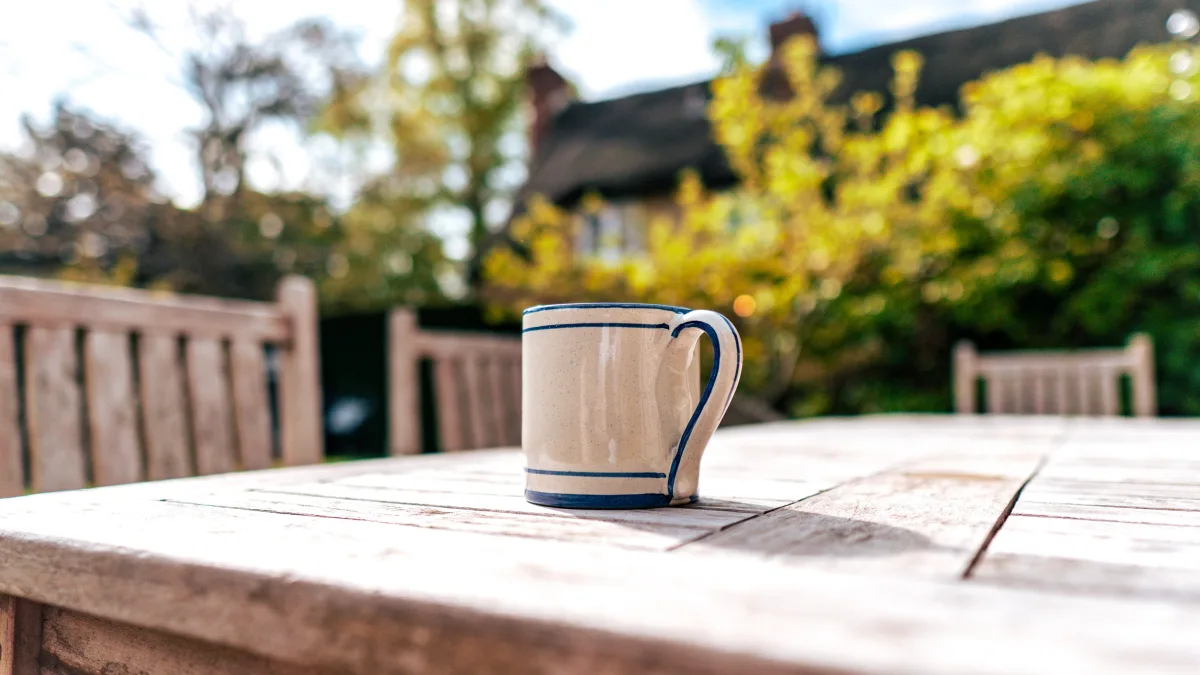
The same table that holds a supper for eight is where the first coffee lands in the morning. A blue-banded stoneware mug catches the early sun, the thatched cottage soft and out of focus behind it, and there is no particular reason to go inside for anything.
The garden works at every hour. Early, it belongs to whoever woke up first. By mid-morning the croquet comes out. By evening the BBQ is going and the chairs are pulled in close. The table marks the time quietly, gathering people all day long.
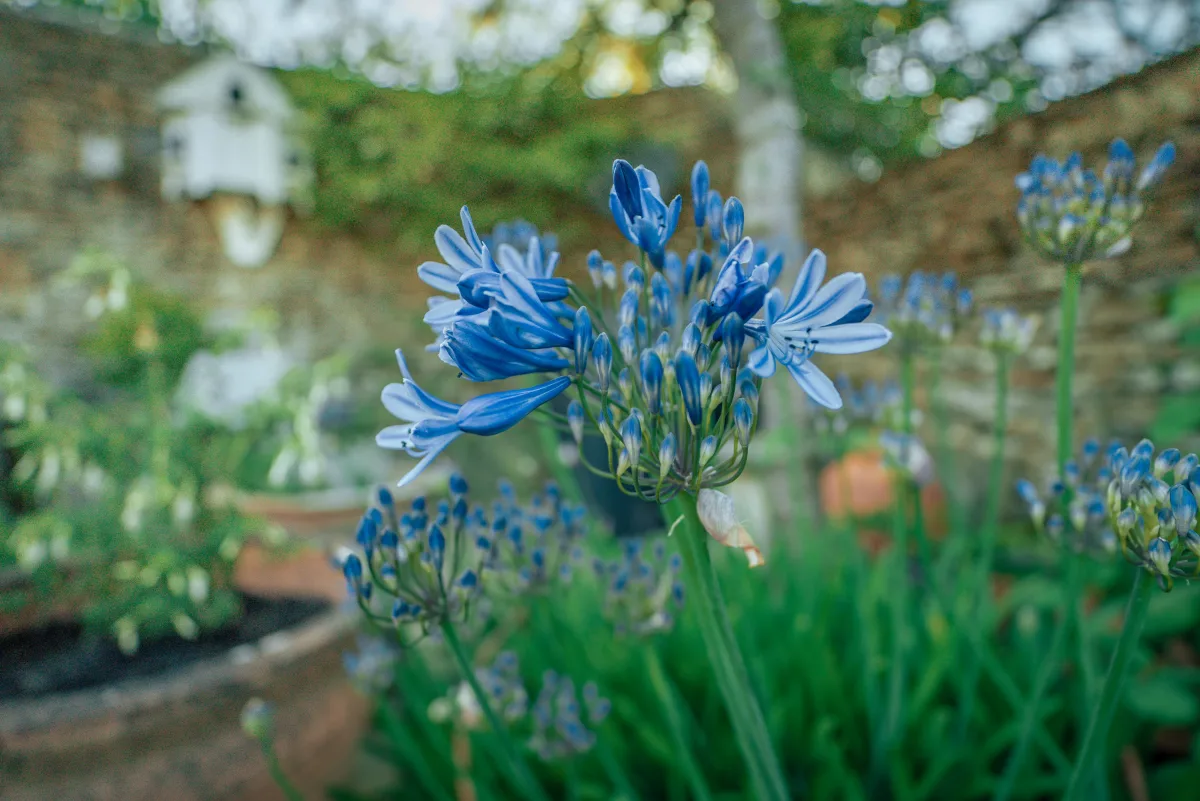
Pots of agapanthus and lavender soften the borders, their blues and purples cool against the warm Cotswold stone. Hydrangea foliage spills across the edges, and the planting is the kind that looks after itself through the summer, changing colour but never losing its shape.
The white birdhouse and the honey-coloured wall sit soft behind the blooms, and the whole corner works quietly through the seasons. It is not a fussy garden; it is a generous one, the kind that rewards a second look without demanding any attention at all.
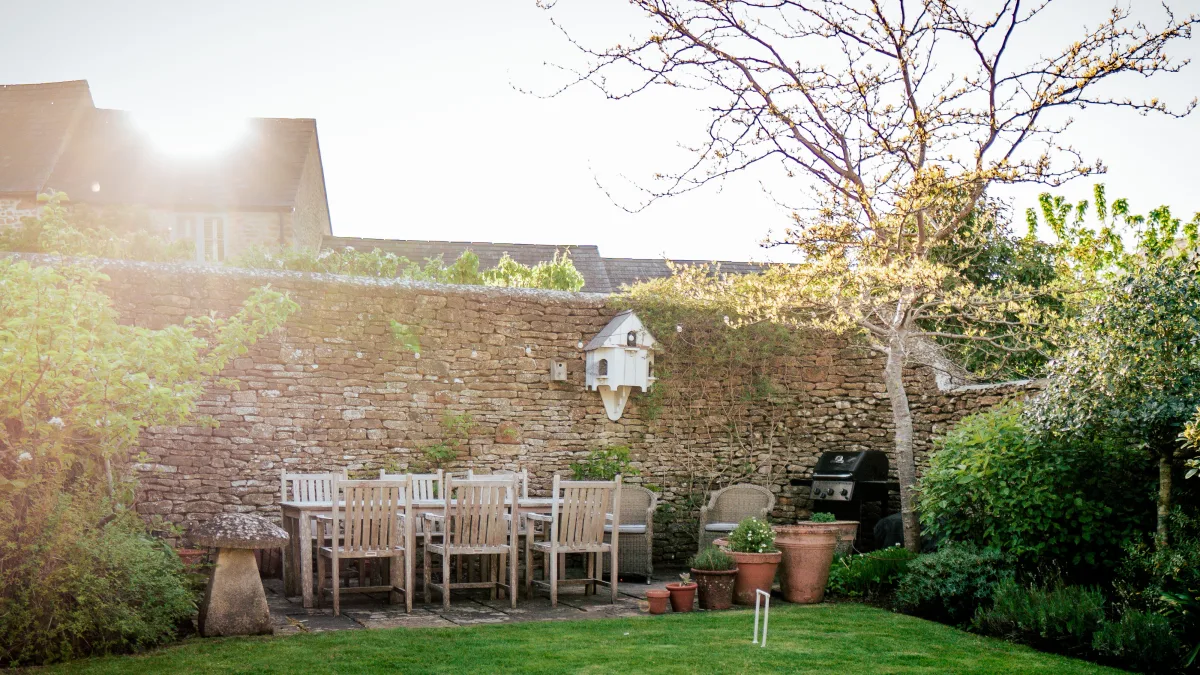
The dry-stone walls that hold the garden in are old enough to have settled into themselves, their lichened Cotswold stone warm in the evening and cool through the morning. They shut out the lane, the village and everything else, leaving the garden feeling much bigger than it is and entirely your own.
As the sun drops behind the rooftops, the light stretches across the patio and the table glows along the wall beneath the birdhouse. Old Cotswold rooftops rise just beyond the stone, close enough to feel like a village, far enough to feel like a secret.
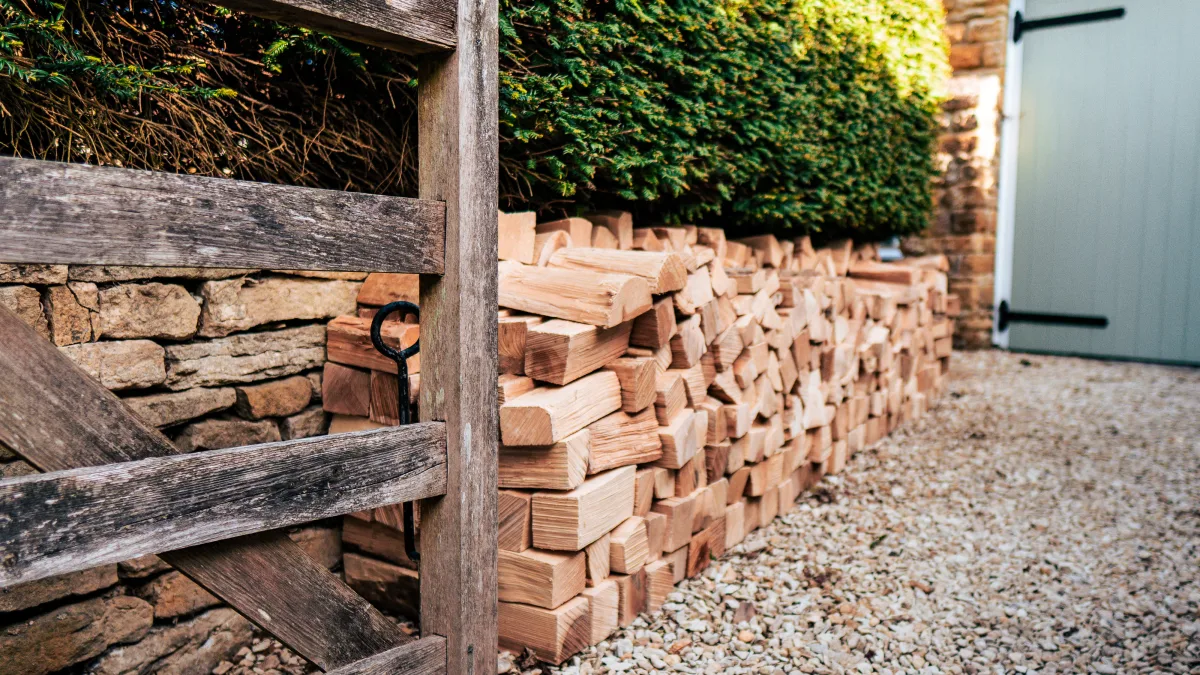
A neat run of split logs lines the gravel path beside the weathered timber gate, stacked tight and ready for the woodburners inside. The clipped hedge runs alongside, and the whole corner has the practical tidiness of a garden that is used properly, not just looked at.
On a cold evening, the walk from the log store to the living room with an armful of ash or oak is one of the quiet rituals of the cottage. The fire catches, the room fills with warmth, and the garden settles into the dark outside.
Sit still for a moment in the walled garden and the birdsong takes over. There is plenty of it here, from the borders and the trees beyond the wall to the little white birdhouse on the stone, and it only gets richer the earlier you are up.
If you have ever wanted to put a name to what you are hearing, the free Merlin Bird ID app does exactly that, listening through your phone and identifying each bird from its song as it sings. Point it at the garden on a still morning and see how many you can gather. Download the free Merlin Bird ID app from the Cornell Lab of Ornithology.
A walled garden, a croquet lawn and long Cotswold evenings, less than a mile from Soho Farmhouse. Check dates and book on Airbnb.